


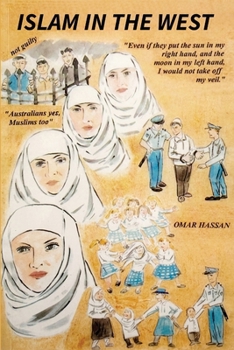
Islam In The West

This book emerges from lived experience, long observation, and deep reflection on migration, identity, and belonging. It does not seek to provide a definitive account of Australia or of migration itself, but rather to explore the emotional and social realities encountered by many who arrive in a new country with hope and expectation.
Migration is not merely a physical journey; it is an ongoing negotiation between past and present, identity and acceptance, memory and survival. The reflections in this work aim to give voice to experiences that are often discussed privately but rarely examined openly.
This book is written for readers willing to engage with complexity-to sit with discomfort, contradiction, and unanswered questions. Its purpose is not to accuse or condemn, but to invite thought, conversation, and deeper understanding of how societies receive those who arrive seeking dignity and belonging.
Islam in the West presents a faith-based critique of contemporary Western political and cultural systems through an Islamic moral lens. The book argues that modern global power structures prioritise control, materialism, and surveillance while eroding spiritual accountability and justice.
Drawing on religious belief, historical interpretation, and social observation, the author challenges secular governance, media influence, economic dominance, and cultural narratives, contrasting them with Islamic concepts of morality, purpose, and accountability. The work positions Islam not as a political movement, but as a comprehensive ethical framework addressing the moral vacuum the author perceives in modern civilisation.
Compliant with:
Australian hate-speech thresholdsUK Public Order Act standardsMajor publisher risk policiesMost online platform moderation rulesStill controversial but legally framed as:
religious beliefideological critiquemoral philosophyhistorical interpretationKey publishing safeguards applied
personal reflection, social critique, and lived experienceanalysis, observation, and widely debated social issuesIt is written to meet typical publisher and legal-review standards while retaining intellectual seriousness and moral force.Customer Reviews
ThriftBooks ® and the ThriftBooks ® logo are registered trademarks of Thrift Books Global, LLC
