


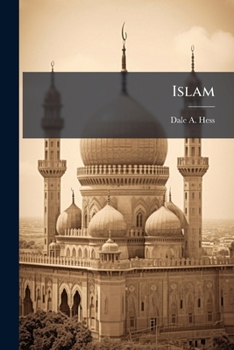
Islam: Double Edged Sword of Instability in the Middle East

This paper examines the role of Islam in regional stability as both a religion and a political influence in the Middle East. It is based on historical research and selected theories of social and political relationships. It provides an overview of Islamic history describing its origin, rise, and decline. It explains the split between Shiite and Sunni sects. It describes internal and external divisions within Islam including the struggle between Iran and Saudi Arabia as keepers of the faith. It identifies other aspects of Islamic influence in the region such as fundamentalist movements and its role in government and international relations. It concludes with a brief look at current US security strategy from the Islamic perspective as a point of departure for future US policy and involvement in the region.
This work has been selected by scholars as being culturally important, and is part of the knowledge base of civilization as we know it. This work was reproduced from the original artifact, and remains as true to the original work as possible. Therefore, you will see the original copyright references, library stamps (as most of these works have been housed in our most important libraries around the world), and other notations in the work.
This work is in the public domain in the United States of America, and possibly other nations. Within the United States, you may freely copy and distribute this work, as no entity (individual or corporate) has a copyright on the body of the work.
As a reproduction of a historical artifact, this work may contain missing or blurred pages, poor pictures, errant marks, etc. Scholars believe, and we concur, that this work is important enough to be preserved, reproduced, and made generally available to the public. We appreciate your support of the preservation process, and thank you for being an important part of keeping this knowledge alive and relevant.
Customer Reviews
ThriftBooks ® and the ThriftBooks ® logo are registered trademarks of Thrift Books Global, LLC
