


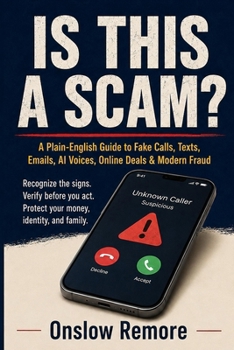
Is This A Scam?

Scams are getting harder to recognize-but you do not have to become a technology expert to protect yourself.
Fake calls. Suspicious texts. Phishing emails. AI-generated voices. Imposter scams. Online deals that seem just a little too good to be true.
Is This a Scam? is a practical, plain-English guide designed to help everyday people slow down, recognize warning signs, verify suspicious situations, and know what to do next.
Inside, you'll learn how to:
Recognize common scam patterns before they cost you money
Use the 60-Second Scam Check when something feels wrong
Verify suspicious calls, texts, emails, payment requests, and online deals
Spot AI voice impersonation, fake authority, urgency, secrecy, and pressure tactics
Understand common bank, government, shopping, job, romance, tech-support, and marketplace scams
Protect older adults, teens, students, and other family members
Respond quickly if you already clicked a link, shared personal information, or sent money
Find official resources for reporting scams and beginning recovery
Throughout the book, you'll use simple rules such as STOP. LEAVE. VERIFY., the Two-Channel Rule, Never pay to get paid, and Recognition is not verification.
You do not need to memorize every scam. You need a repeatable way to stop, think clearly, and independently verify what you are being told.
Whether you are worried about yourself, helping a parent, protecting your family, or simply trying to become harder to fool, Is This a Scam? gives you practical tools you can use immediately.
Recognize the signs. Verify before you act. Protect your money, identity, and family.
Customer Reviews
ThriftBooks ® and the ThriftBooks ® logo are registered trademarks of Thrift Books Global, LLC
