


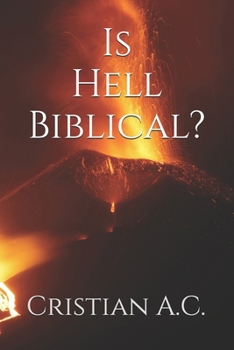
Is Hell Biblical?

This book offers a biblical, theological, and historical study of one of the most debated topics in Christianity: the final judgment and the ultimate destiny of the wicked. Designed for believers, leaders, and students of Scripture who wish to examine the doctrine of hell with depth and rigor, it brings together exegetical analysis, doctrinal reflection, and historical evaluation in a single structured and coherent volume.
The work presents a progressive journey that begins by outlining the problem and the main Christian interpretations regarding the final destiny-eternal conscious torment, annihilation, or universal restoration-and continues with a detailed analysis of the key biblical terms: Sheol, Hades, Gehenna, Tartarus, "eternal fire," and the "lake of fire." Each chapter addresses these concepts within their historical and literary context, avoiding unexamined traditional assumptions and allowing the biblical text to be interpreted within its own framework.
The book explores in depth the meaning of the term "eternal" in Scripture, examines the parallel between eternal life and eternal punishment, and responds directly to the proposal of final restoration. It also dedicates an entire section to the historical origin and development of the doctrine of hell, analyzing the influence of philosophical and cultural currents on the later formulation of certain interpretations.
Beyond the academic debate, the work reflects on the spiritual and pastoral implications of the traditional doctrine, addressing its effects on the understanding of God's character, proportional justice, and Christian hope. The book argues that the final judgment must be understood in harmony with the biblical revelation of divine love, holiness, and justice, culminating in the definitive eradication of evil and the restoration of creation.
With clear language, structured argumentation, and careful attention to the biblical text, this study does not seek to minimize the seriousness of judgment or to trivialize sin, but rather to examine honestly what form the final judgment takes and what that form reveals about the character of God.
A work intended for those who wish to go beyond inherited assertions, confront the subject with biblical rigor, and consider an understanding of the final judgment that preserves both the justice and the hope proclaimed by the gospel.
Customer Reviews
ThriftBooks® and the ThriftBooks® logo are registered trademarks of Thrift Books Global, LLC
