


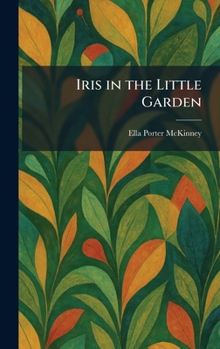
Iris in the Little Garden

"Iris in the Little Garden" is an essential guide for garden enthusiasts and flower lovers, focusing specifically on the beauty and variety of the iris within the context of smaller garden spaces. Written by Ella Porter McKinney, this work explores the various species and cultivars of irises, offering practical advice on selection, planting, and maintenance. The book highlights the iris as a versatile and resilient perennial, capable of providing vibrant color and structural interest to any landscape.
Throughout the text, McKinney shares her deep horticultural knowledge, discussing the specific needs of different iris types, from the popular bearded iris to the more delicate Siberian and Japanese varieties. The work emphasizes the aesthetic value of these flowers, providing tips on how to integrate them effectively into garden designs to ensure a continuous bloom and a harmonious color palette. Readers will find detailed information on soil requirements, fertilization, and propagation, making this a comprehensive resource for both novice and experienced gardeners.
As a significant contribution to early 20th-century gardening literature, "Iris in the Little Garden" remains a valuable reference for anyone looking to cultivate these elegant blooms. Its focus on the practical application of horticultural principles in a modest setting makes it particularly relevant for those seeking to maximize the beauty of their own personal garden retreats.
This work has been selected by scholars as being culturally important, and is part of the knowledge base of civilization as we know it. This work was reproduced from the original artifact, and remains as true to the original work as possible. Therefore, you may see the original copyright references, library stamps (as most of these works have been housed in our most important libraries around the world), and other notations in the work.
This work is in the public domain in the United States of America, and possibly other nations. Within the United States, you may freely copy and distribute this work, as no entity (individual or corporate) has a copyright on the body of the work.
As a reproduction of a historical artifact, this work may contain missing or blurred pages, poor pictures, errant marks, etc. Scholars believe, and we concur, that this work is important enough to be preserved, reproduced, and made generally available to the public. We appreciate your support of the preservation process, and thank you for being an important part of keeping this knowledge alive and relevant.
Customer Reviews
ThriftBooks ® and the ThriftBooks ® logo are registered trademarks of Thrift Books Global, LLC
