


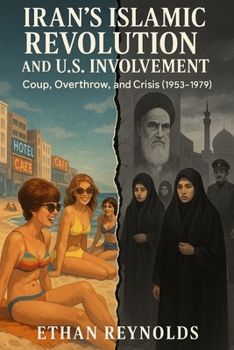
Iran's Islamic Revolution and U.S. Involvement: Coup, Overthrow, and Crisis (1953-1979)

Spanning the seismic decades from the CIA-backed 1953 coup to the 444-day hostage crisis, Iran's Islamic Revolution and U.S. Involvement: Coup, Overthrow, and Crisis (1953-1979) unpacks how foreign intervention, economic upheaval, and religious revival converged to topple the Pahlavi monarchy and reshape the Middle East. Historian Ethan Reynolds weaves newly declassified cables, eyewitness accounts, and gripping narrative to reveal
Operation Ajax's lasting shockwaves - how a covert Anglo-American plot against Prime Minister Mossadegh forged deep anti-Western sentiment and empowered an increasingly autocratic Shah.
The Shah's "modernization" paradox - soaring oil revenues, glittering megaprojects, and SAVAK repression that widened Iran's wealth gap and silenced dissent.
Grass-roots resistance and clerical leadership - the bazaar merchants, students, and Ayatollah Khomeini's exiled sermons that fused nationalism with Shia ideology.
Washington's missteps - from touting Iran as an "island of stability" to misreading revolutionary fervor, culminating in embassy seizure and global fallout.
Reynolds pairs vivid storytelling with rigorous scholarship, tracing how inflation, censorship, and cultural backlash ignited a movement that still reverberates through sanctions, proxy wars, and nuclear negotiations today. Readers seeking to understand Iran's trajectory and America's role in it will find this definitive chronicle both enlightening and unsettling.
Customer Reviews
ThriftBooks® and the ThriftBooks® logo are registered trademarks of Thrift Books Global, LLC
