


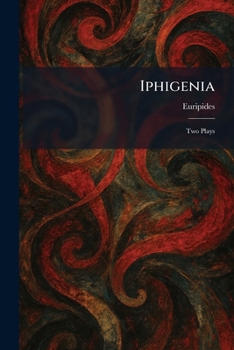
Iphigenia: Two Plays

Select Format
Select Condition 
Book Overview
"Iphigenia: Two Plays" brings together two pivotal tragedies by Euripides, one of the greatest dramatists of classical Athens. These works explore the harrowing and complex myth of Iphigenia, the daughter of King Agamemnon, whose fate is inextricably tied to the Trojan War and the whims of the gods. In the first play, set in Aulis, the narrative centers on the agonizing choice faced by a father who must sacrifice his own daughter to appease the goddess Artemis and ensure the Greek fleet's passage to Troy. The second play shifts the scene to Tauris, where a miraculous survival leads to a high-stakes reunion and a daring escape.
Euripides is renowned for his psychological realism and his willingness to question traditional heroic values. Through these plays, he examines themes of sacrificial duty, familial loyalty, and the often-cruel irony of divine intervention. "Iphigenia: Two Plays" offers readers a profound look at the human condition under extreme duress, showcasing the lyrical beauty and dramatic tension that have made Euripides' work a cornerstone of Western literature for over two millennia. This collection serves as an essential introduction to the emotional depth and intellectual rigor of ancient Greek theater.
This work has been selected by scholars as being culturally important, and is part of the knowledge base of civilization as we know it. This work was reproduced from the original artifact, and remains as true to the original work as possible. Therefore, you may see the original copyright references, library stamps (as most of these works have been housed in our most important libraries around the world), and other notations in the work.
This work is in the public domain in the United States of America, and possibly other nations. Within the United States, you may freely copy and distribute this work, as no entity (individual or corporate) has a copyright on the body of the work.
As a reproduction of a historical artifact, this work may contain missing or blurred pages, poor pictures, errant marks, etc. Scholars believe, and we concur, that this work is important enough to be preserved, reproduced, and made generally available to the public. We appreciate your support of the preservation process, and thank you for being an important part of keeping this knowledge alive and relevant.
Customer Reviews
ThriftBooks ® and the ThriftBooks ® logo are registered trademarks of Thrift Books Global, LLC
