


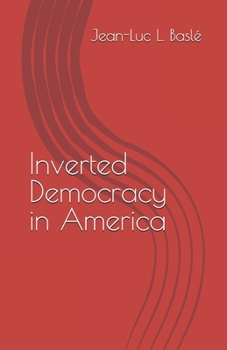
Inverted Democracy in America
No Customer Reviews

American democracy was based on a double balance: between the states and the federal government, on the one hand, and the three branches of government, the legislature, the executive, and the judiciary, on the other. It received its first blow during the American Civil War. Abraham Lincoln's concern was not so much the fate of the blacks as the unity of the nation. Despite his training as a lawyer, he paid little attention to the Constitution when circumstances required it. Once the war was over, the federal state soon began a colonial policy in response to a dual need arising from industrialization: access to natural resources and to new markets. Foreign policy became imperialist after World War II, and hegemonic after the collapse of the Soviet Union. Colonial and imperial policies upset the balance between the states and the federal government. The hegemonic policy broke the equilibrium between the three branches in favor of the executive branch. Events such as September 11, the subprime crisis and the pandemic were used to justify the strengthening of the executive. Overtime, the American democracy has been weakened in an unequal struggle between the elite and the people over the distribution of power and wealth.
Format:Paperback
Language:English
ISBN:2959881400
ISBN13:9782959881404
Release Date:February 2025
Publisher:978-2-9598814-0-4
Length:212 Pages
Weight:0.47 lbs.
Dimensions:0.5" x 5.1" x 7.8"
Related Subjects
HistoryCustomer Reviews
0 rating
Copyright © 2026 Thriftbooks.com
Terms of Use | Privacy Policy | Do Not Sell/Share My Personal Information | Cookie Policy | Cookie Preferences | Accessibility Statement
ThriftBooks ® and the ThriftBooks ® logo are registered trademarks of Thrift Books Global, LLC
ThriftBooks ® and the ThriftBooks ® logo are registered trademarks of Thrift Books Global, LLC
