


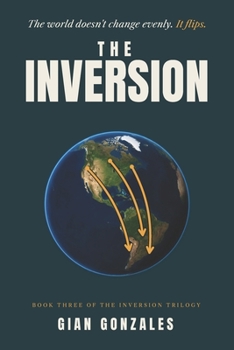
Inversion: Climate, Collapse, and the World's Next Human Movement

"For two centuries, people moved south to north. Gian Gonzales makes a data-driven and unsettling case that the flow is reversing, and that most of the cities about to lose their people haven't noticed yet. The Inversion reads like a warning and works like a map." - Gaia Vince
You have already done the math.
Maybe at two in the morning, staring at a rent increase you can't absorb. Maybe after your job was eliminated, or the summer your city stopped cooling down at night. You opened a browser. You searched. You are not alone.
In 2025, an estimated 150,000 Americans left the United States permanently, and more people left than arrived for the first time since the Great Depression. One in five Americans now tells Gallup they want to move abroad for good. Among women under 45, it's four in ten. In Canada, more than 100,000 citizens are estimated to have emigrated in a single year. The nurse in Toronto is researching apartments in Medell n. The engineer in Phoenix is doing the math on his aquifer. They aren't fleeing poverty. They're fleeing systems that worked, until the thresholds were crossed.
The world doesn't change evenly. It flips.
For two hundred years, people have moved from south to north. The Inversion argues that this flow is reversing. Not because the South has solved its problems, but because the North is crossing climate, economic and institutional thresholds that can't be uncrossed, while the South still has thresholds it hasn't reached. That gap is the differential, and migration has always followed the differential. Ireland, Italy, Spain and South Korea all exported their people, until the differential flipped and the flow stopped.
Using the Threshold Model, the book maps which thresholds have already been crossed in cities like Phoenix, Toronto and Paris, and which receiving zones are emerging in Latin America. It follows the water that doesn't return, the heat that does, the rising cost of staying, and the speed at which money moves when people do. Wealth can insulate individuals. It can't insulate systems. When the nurses, teachers and electricians leave, a city stops working.
This book is for:
Anyone already doing the math on rent, heat or water and wondering whether to stay.Remote workers, families and retirees researching where to build the next chapter of their lives.Investors and real estate professionals tracking where people and capital move before the market prices it in.Readers tired of corruption and extractive government, who see public money, water and land captured by the few while the cities they live in stop working for everyone else.City leaders and planners in the North watching the workers who keep their cities running quietly leave.Latin American leaders, mayors and entrepreneurs in the cities about to receive the reversal, with a narrow window to prepare.Concerned citizens watching neighbors, nurses and teachers move away, and wanting to understand why.Book 3 of the trilogy, after The Pacific Pulse and The Water Code. The first showed that climate is geopolitics. The second, that water is power. This one shows that the city is a decision.
The window closes around 2032. You have time. Not much. But you have it.
Customer Reviews
ThriftBooks ® and the ThriftBooks ® logo are registered trademarks of Thrift Books Global, LLC
