


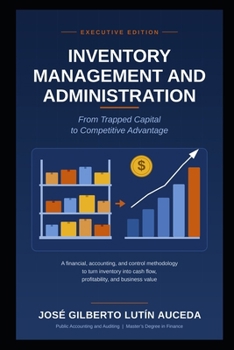
Inventory Management and Administration
No Customer Reviews

The problem is not having inventory. It is not knowing what it costs to hold it.
On the balance sheet, inventory sits within current assets, and that placement suggests liquidity. But inventory is not cash: it is capital waiting for a sale. Every unit in storage has only three possible outcomes: it is sold at the expected price, it is sold at a discount, or it is written off. Inventory management is about raising the probability of the first outcome and lowering that of the third.
Companies tend to make two opposite mistakes. The first is excess: tied-up capital, storage and insurance costs, obsolescence risk, and pressure on liquidity. The second is shortage: lost sales, dissatisfied customers, and emergency purchases at higher prices. Managing well does not mean holding the minimum inventory, but the level that balances both mistakes with the least possible capital.
Format:Paperback
Language:English
ISBN:B0HMZSV3ZZ
ISBN13:9798162334675
Release Date:October 2026
Publisher:Independently Published
Length:70 Pages
Weight:0.23 lbs.
Dimensions:0.1" x 6.0" x 9.0"
Customer Reviews
0 rating
Copyright © 2026 Thriftbooks.com
Terms of Use | Privacy Policy | Do Not Sell/Share My Personal Information | Cookie Notice | Cookie Preferences | Accessibility Statement
ThriftBooks ® and the ThriftBooks ® logo are registered trademarks of Thrift Books Global, LLC
ThriftBooks ® and the ThriftBooks ® logo are registered trademarks of Thrift Books Global, LLC
