


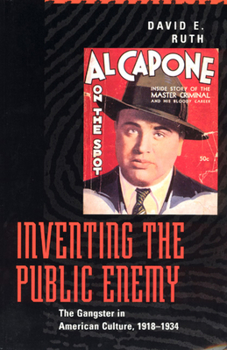
Inventing the Public Enemy: The Gangster in American Culture, 1918-1934


Select Format
Select Condition 
Book Overview
In this richly detailed account of mass media images, David Ruth looks at Al Capone and other "invented" gangsters of the 1920s and 1930s. The subject of innumerable newspaper and magazine articles, scores of novels, and hundreds of Hollywood movies, the gangster was a compelling figure for Americans preoccupied with crime and the social turmoil it symbolized. Ruth shows that the media gangster was less a reflection of reality than a projection created from Americans' values, concerns, and ideas about what would sell. We see efficient criminal executives demonstrating the multifarious uses of organization; dapper, big-spending gangsters highlighting the promises and perils of the emerging consumer society; and gunmen and molls guiding an uncertain public through the shifting terrain of modern gender roles. In this fascinating study, Ruth reveals how the public enemy provides a far-ranging critique of modern culture.
Format:Paperback
Language:English
ISBN:0226732185
ISBN13:9780226732183
Release Date:April 1996
Publisher:University of Chicago Press
Length:200 Pages
Weight:0.70 lbs.
Dimensions:0.5" x 6.0" x 9.1"
Customer Reviews
1 rating
Fine beginner's text
Published by Thriftbooks.com User , 25 years ago
Ruth's book is an interesting introduction to gangster movies and their function in American Culture. Although Ruth's writing is somewhat dull, the way he reveals deep connections between gangster movies (e.g. The Public Enemy) and contemporaraneous cultural anxieties is remarkable. A fine introduction to ways of discussing the political implications of popular culture; recommended for high schoolers and early college readers interested in the subject.
Copyright © 2026 Thriftbooks.com Terms of Use
| Privacy Policy | Do Not
Sell/Share My Personal Information | Cookie Policy | Cookie Preferences | Accessibility Statement
ThriftBooks® and the ThriftBooks® logo are registered trademarks of Thrift Books Global, LLC
ThriftBooks® and the ThriftBooks® logo are registered trademarks of Thrift Books Global, LLC
