


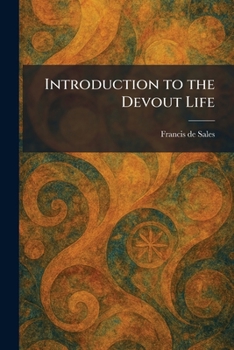
Introduction to the Devout Life


Select Format
Select Condition 
Book Overview
"Introduction to the Devout Life" is a cornerstone of Christian spiritual literature, offering practical and profound guidance for individuals seeking to deepen their relationship with God while living in the world. Written by Saint Francis de Sales, this classic work breaks away from the idea that a life of holiness is reserved solely for monastics or clergy. Instead, it presents a path to devotion that is accessible to people of all walks of life.
The book is structured as a series of letters addressed to Philothea, a name representing any soul who loves God. Through these correspondences, Saint Francis de Sales provides a comprehensive guide to the spiritual life, covering topics such as the importance of prayer, the frequentation of the sacraments, the cultivation of specific virtues, and the management of everyday temptations and distractions. With its gentle tone and psychological insight, the work emphasizes the "spirit of liberty" and the transformative power of divine love.
As a foundational text of Catholic spirituality, "Introduction to the Devout Life" remains an essential resource for those seeking a balanced, disciplined, and joyful faith. Its timeless wisdom continues to inspire readers to find sacredness in the mundane and to pursue perfection through the simple acts of daily life.
This work has been selected by scholars as being culturally important, and is part of the knowledge base of civilization as we know it. This work was reproduced from the original artifact, and remains as true to the original work as possible. Therefore, you may see the original copyright references, library stamps (as most of these works have been housed in our most important libraries around the world), and other notations in the work.
This work is in the public domain in the United States of America, and possibly other nations. Within the United States, you may freely copy and distribute this work, as no entity (individual or corporate) has a copyright on the body of the work.
As a reproduction of a historical artifact, this work may contain missing or blurred pages, poor pictures, errant marks, etc. Scholars believe, and we concur, that this work is important enough to be preserved, reproduced, and made generally available to the public. We appreciate your support of the preservation process, and thank you for being an important part of keeping this knowledge alive and relevant.
Customer Reviews
They keep sending me the wrong book
Description of book was not what it said it was
What More Can Be Said?
Introduction to the Devout Life : A Popular Abridgment
ThriftBooks ® and the ThriftBooks ® logo are registered trademarks of Thrift Books Global, LLC
