


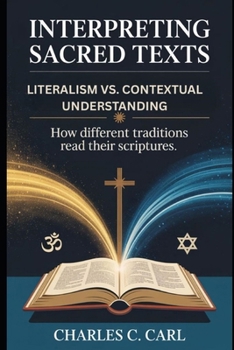
Interpreting Sacred Texts: LITERALISM VS. CONTEXTUAL UNDERSTANDING (How different traditions read their scriptures)

INTERPRETING SACRED TEXTS
LITERALISM VS. CONTEXTUAL UNDERSTANDING (How Different Traditions Read Their Scriptures)
How do believers truly understand their holy books? Interpreting Sacred Texts explores the fascinating ways different religions read, explain, and live by their scriptures. From literal interpretations that uphold unchanging truths to contextual approaches that adapt to time and culture, this book reveals how faith traditions engage with their sacred words across centuries.
Through balanced historical and theological insight, it examines the Bible, Qur'an, Torah, Vedas, and Buddhist Sutras, showing how interpretation shapes belief, law, ethics, and community life. The book also highlights the debates and discussions that arise when ancient texts meet modern realities-offering readers a thoughtful view of how meaning evolves without losing reverence for the divine message.
Inside this book, you'll discover:
How major religions developed methods of scriptural interpretation
The difference between literal and symbolic readings of holy texts
Case studies from Christianity, Islam, Judaism, Hinduism, and Buddhism
How scholars, priests, and teachers interpret texts for guidance and law
The impact of translation, language, and culture on meaning
Modern debates on gender, science, and morality in sacred interpretation
Written in clear, verifiable language, Interpreting Sacred Texts: Literalism vs. Contextual Understanding invites readers to explore how faith communities seek truth within their scriptures. Whether you are a student of religion, a scholar, or a curious reader, this book provides a balanced and engaging look at how sacred words continue to shape hearts, societies, and spiritual understanding around the world.
Customer Reviews
ThriftBooks® and the ThriftBooks® logo are registered trademarks of Thrift Books Global, LLC
