


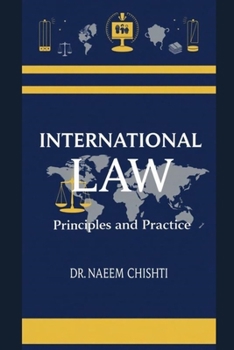
International Law: Principles and Practice

International Law: Principles and Practice is a carefully structured and comprehensive resource that offers a clear understanding of the foundations, development, and contemporary application of international law. Designed for students preparing for competitive examinations such as the CSS, as well as legal scholars and practitioners, the book combines theoretical depth with practical insight to address the complexities of global legal systems.
The text opens with an exploration of the nature, origin, and evolution of international law, tracing its development from early European thought to the modern state system. It examines how legal norms governing relations between states emerged, while also addressing key challenges such as enforcement, effectiveness, and the inherent limitations of international law. Readers are introduced to its juridical foundations and principal sources, including treaties, customary law, and general principles, along with reflections on the future of global legal governance.
A core focus of the book is the relationship between international law and domestic legal systems, guided by Article 38 of the Statute of the International Court of Justice. It clearly distinguishes between primary and subsidiary sources of law, covering treaties, customary rules, judicial decisions, and scholarly writings, as well as the growing importance of soft law instruments such as declarations and guidelines. The discussion highlights how international obligations are interpreted, applied, and incorporated within national legal frameworks.
The book also provides a detailed analysis of the concept of the state, including statehood, recognition, and the subjects of international law. It explains the criteria for recognition and distinguishes between de facto and de jure recognition, while examining both legal and political dimensions from international and domestic perspectives.
In its treatment of treaty law, the book offers an in-depth study of the Vienna Convention on the Law of Treaties, explaining the processes of treaty formation, interpretation, reservations, and termination. This enables readers to develop a clear understanding of how states create and manage binding legal commitments.
The section on the peaceful settlement of disputes presents a thorough overview of mechanisms such as negotiation, mediation, conciliation, and arbitration, along with the roles of the United Nations and the International Court of Justice. Practical examples and case studies illustrate how disputes are resolved in practice, emphasizing both procedural frameworks and substantive outcomes.
Significant attention is given to international humanitarian law. The book outlines protections for combatants, prisoners of war, civilians, and other vulnerable groups, while also addressing restrictions on the conduct of hostilities. Complementing this, the discussion on the use of force examines the principles of the UN Charter, collective security, and the right of self-defense, offering a balanced perspective on the legality of military action.
Further chapters explore key areas such as state responsibility, territorial sovereignty, jurisdiction, succession of rights and obligations, and the interaction between states and individuals. The roles of international institutions and the legal framework governing diplomatic and consular relations are also examined in detail, alongside broader issues relating to war, neutrality, and global governance.
Written in a clear and accessible style, the book balances academic rigor with practical relevance. Its structured approach, detailed explanations, and illustrative examples make it a valuable resource for both examination preparation and professional reference. By bridging theory and practice, it equips readers with the knowledge and analytical skills needed to understand and navigate the evolving landscape of international law.
Related Subjects
LawCustomer Reviews
ThriftBooks ® and the ThriftBooks ® logo are registered trademarks of Thrift Books Global, LLC
