


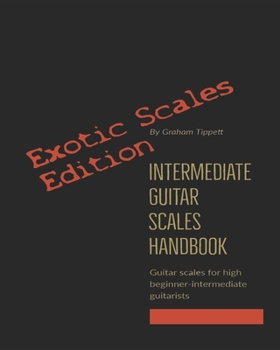
Intermediate Guitar Scales Handbook: Exotic Scales Edition

You learn one, play it over a drone, impress yourself for an afternoon, and never touch it again. That happens because almost every exotic scale resource hands over the patterns without answering the only question that matters: over what?
This book answers that first. Each of the fifteen scales is filed by the chord type it belongs over - chords you already know and probably play every week. The scale arrives attached to a context instead of floating free, so you can use it the same day you learn it.
Fifteen scales, chosen rather than collectedThere are hundreds of exotic scales and most of them are curiosities. These are the ones I keep coming back to: the ones that reach sounds standard major and minor harmony simply can't get to, and that survive contact with actual playing.
Chord progressions built from scalesThe final section is the part I'd point at. Two straightforward methods for building progressions out of any scale in the book, which puts a whole area of strange and beautiful harmony within reach without needing to study non-diatonic theory first. Most players find this more useful than the soloing material.
Who it's forIntermediate and advanced guitarists who want sounds that don't come out of the major and minor toolkit. Players who have tried exotic scales before and could never make them stick in real music. Anyone writing or improvising who wants harmony that doesn't sound like everybody else's.
You don't need the original Intermediate Guitar Scales Handbook to use this. It stands on its own. If you have read it, this uses the same method and these scales drop straight into it.
Customer Reviews
ThriftBooks ® and the ThriftBooks ® logo are registered trademarks of Thrift Books Global, LLC
