


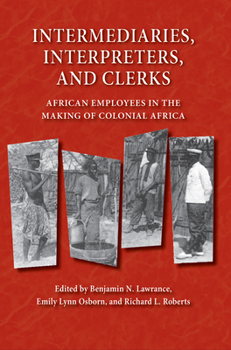
Intermediaries, Interpreters, and Clerks: African Employees in the Making of Colonial Africa
No Customer Reviews

Select Format
Select Condition 
Book Overview
As a young man in South Africa, Nelson Mandela aspired to be an interpreter or clerk, noting in his autobiography that "a career as a civil servant was a glittering prize for an African." Africans in the lower echelons of colonial bureaucracy often held positions of little official authority, but in practice these positions were lynchpins of colonial rule. As the primary intermediaries among European colonial officials, African chiefs, and subject populations, these civil servants could manipulate the intersections of power, authority, and knowledge at the center of colonial society.
By uncovering the role of such men (and a few women) in the construction, function, and legal apparatus of colonial states, the essays in this volume highlight a new perspective. They offer important insights on hegemony, collaboration, and resistance, structures and changes in colonial rule, the role of language and education, the production of knowledge and expertise in colonial settings, and the impact of colonization in dividing African societies by gender, race, status, and class.
By uncovering the role of such men (and a few women) in the construction, function, and legal apparatus of colonial states, the essays in this volume highlight a new perspective. They offer important insights on hegemony, collaboration, and resistance, structures and changes in colonial rule, the role of language and education, the production of knowledge and expertise in colonial settings, and the impact of colonization in dividing African societies by gender, race, status, and class.
Format:Paperback
Language:English
ISBN:0299219542
ISBN13:9780299219543
Release Date:August 2015
Publisher:University of Wisconsin Press
Length:342 Pages
Weight:1.15 lbs.
Dimensions:0.7" x 6.0" x 9.0"
Customer Reviews
0 rating
Copyright © 2025 Thriftbooks.com
Terms of Use | Privacy Policy | Do Not Sell/Share My Personal Information | Cookie Policy | Cookie Preferences | Accessibility Statement
ThriftBooks ® and the ThriftBooks ® logo are registered trademarks of Thrift Books Global, LLC
ThriftBooks ® and the ThriftBooks ® logo are registered trademarks of Thrift Books Global, LLC
