


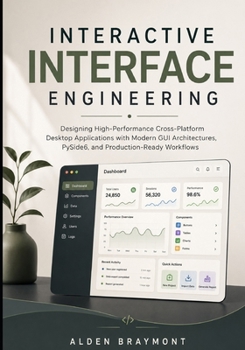
Interactive Interface Engineering: Designing High-Performance Cross-Platform Desktop Applications with Modern GUI Architectures, PySide6, and Producti
No Customer Reviews

Every GUI project starts clean. Most die in eighteen months.
You can build a working PySide6 prototype in a weekend. Keeping it alive - through real users, real data volume, and a team that isn't you - is a different problem entirely, and almost nothing written about Qt or PySide6 actually teaches it.
Interactive Interface Engineering closes that gap. Rather than another widget-by-widget API tour, this book follows one real system - Meridian, a field-service dispatch platform - from an empty repository to a hardened, cross-platform production release, with every architectural decision made in the order it actually had to be made and explained in plain terms: not just what to type, but when and why.
Across fifteen chapters you'll build: An MVVM architecture and repository structure that doesn't need to be torn up at chapter tenResponsive, adaptive layouts with a centralized theming systemThreaded, non-blocking data operations and real-time visualizations that stay fast under loadAccessibility support that goes beyond checkbox complianceOffline-first sync against a REST backend, with conflict resolutionHuman-in-the-loop AI features designed with realistic failure modes in mindCentralized, testable state managementA full automated testing strategy and CI pipelinePackaging and installers for Windows, macOS, and LinuxProduction monitoring, plugin architecture, and a final go-live readiness reviewWritten for developers who already know Python and want to ship desktop software other people depend on - not a syntax reference, but a guide to the judgment calls Qt's own docs don't teach.
Format:Paperback
Language:English
ISBN:B0HF566P7J
ISBN13:9798192404447
Release Date:August 2026
Publisher:Independently Published
Length:204 Pages
Weight:0.80 lbs.
Dimensions:0.4" x 7.0" x 10.0"
Customer Reviews
0 rating
Copyright © 2026 Thriftbooks.com
Terms of Use | Privacy Policy | Do Not Sell/Share My Personal Information | Cookie Notice | Cookie Preferences | Accessibility Statement
ThriftBooks ® and the ThriftBooks ® logo are registered trademarks of Thrift Books Global, LLC
ThriftBooks ® and the ThriftBooks ® logo are registered trademarks of Thrift Books Global, LLC
