


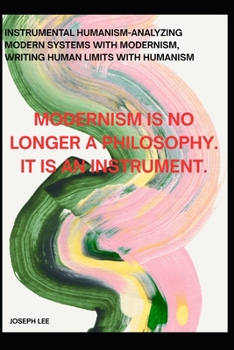
Instrumental Humanism-Analyzing Modern Systems With Modernism, Writing Human Limits With Humanism: Modernism is no longer a philosophy. It is an instr

Instrumental Humanism is not a book about kindness, morality, or ideals.
It is a structural declaration.
This book argues that modern systems do not fail humans by accident.
They fail humans by design-by externalizing cost, normalizing sacrifice, and redefining collapse as personal weakness.
Rather than proposing another ethical appeal, Instrumental Humanism introduces a framework in which human dignity is treated as a non-negotiable structural constraint, not a moral suggestion.
Drawing from system analysis, institutional design, disability-first logic, and failure mechanics, the book introduces:
Structural Failure Analysis (SFA) - a method for identifying failure as system output
Human Tolerance Band (HTB) - the measurable limits of sustainable human participation
Failure Normalization and Cost Externalization as core design mechanisms
Instrumental Humanism (IH) as a post-modern framework for redesigning systems without sacrifice
This is not a manifesto of hope.
It is a refusal to design systems that require heroism to survive.
Written for readers who work with systems-policy designers, researchers, administrators, engineers, and institutional critics-this book functions as both a declaration and a reference document.
It is meant to be cited, not consumed.
Related Subjects
PhilosophyCustomer Reviews
ThriftBooks® and the ThriftBooks® logo are registered trademarks of Thrift Books Global, LLC
