


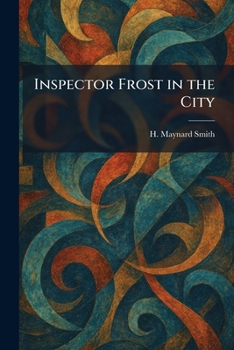
Inspector Frost in the City

"Inspector Frost in the City" is a classic British mystery featuring the methodical and sharp-witted Inspector Frost of Scotland Yard. Set against the bustling and high-stakes backdrop of London's financial district, the story follows Frost as he navigates a complex web of deceit and criminal activity. When a series of baffling events strikes at the heart of the City, the seasoned detective must rely on his extensive experience and keen observational skills to unravel the truth.
H. Maynard Smith crafts a compelling police procedural that captures the atmosphere of the interwar period. The narrative emphasizes logical deduction and the meticulous process of investigation, characteristic of the Golden Age of detective fiction. As Frost peels back the layers of a sophisticated plot, readers are treated to a masterclass in traditional mystery writing, where every clue matters and every suspect has something to hide.
This work stands as a testament to the enduring appeal of the classic British whodunit. "Inspector Frost in the City" offers a vivid glimpse into the legal and social intricacies of early 20th-century London, making it an essential read for fans of vintage crime fiction and those who appreciate the patient, intellectual pursuit of justice.
This work has been selected by scholars as being culturally important, and is part of the knowledge base of civilization as we know it. This work was reproduced from the original artifact, and remains as true to the original work as possible. Therefore, you may see the original copyright references, library stamps (as most of these works have been housed in our most important libraries around the world), and other notations in the work.
This work is in the public domain in the United States of America, and possibly other nations. Within the United States, you may freely copy and distribute this work, as no entity (individual or corporate) has a copyright on the body of the work.
As a reproduction of a historical artifact, this work may contain missing or blurred pages, poor pictures, errant marks, etc. Scholars believe, and we concur, that this work is important enough to be preserved, reproduced, and made generally available to the public. We appreciate your support of the preservation process, and thank you for being an important part of keeping this knowledge alive and relevant.
Customer Reviews
ThriftBooks ® and the ThriftBooks ® logo are registered trademarks of Thrift Books Global, LLC
