


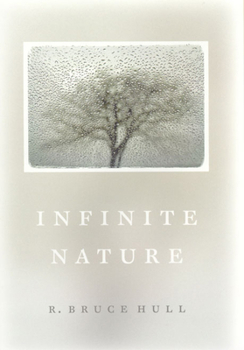
Infinite Nature

Select Format
Select Condition 
Book Overview
You would be hard-pressed to find someone who categorically opposes protecting the environment, yet most people would agree that the environmentalist movement has been ineffectual and even misguided. Some argue that its agenda is misplaced, oppressive, and misanthropic-a precursor to intrusive government, regulatory bungles, and economic stagnation. Others point out that its alarmist rhetoric and preservationist solutions are outdated and insufficient to the task of galvanizing support for true reform. In this impassioned and judicious work, R. Bruce Hull argues that environmentalism will never achieve its goals unless it sheds its fundamentalist logic. The movement is too bound up in polarizing ideologies that pit humans against nature, conservation against development, and government regulation against economic growth. Only when we acknowledge the infinite perspectives on how people should relate to nature will we forge solutions that are respectful to both humanity and the environment. Infinite Nature explores some of these myriad perspectives, from the scientific understandings proffered by anthropology, evolution, and ecology, to the promise of environmental responsibility offered by technology and economics, to the designs of nature envisioned in philosophy, law, and religion. Along the way, Hull maintains that the idea of nature is social: in order to reach the common ground where sustainable and thriving communities are possible, we must accept that many natures can and do exist. Incisive, heartfelt, and brimming with practical solutions, Infinite Nature brings a much-needed and refreshing voice to the table of environmental reform.
Format:Paperback
Language:English
ISBN:022610222X
ISBN13:9780226102221
Release Date:July 2013
Publisher:University of Chicago Press
Length:232 Pages
Weight:1.00 lbs.
Dimensions:0.6" x 6.0" x 9.0"
Customer Reviews
2 ratings
What does nature mean to you?
Published by Thriftbooks.com User , 19 years ago
What does the mention of "nature" bring to mind? Nurturing and providing, or competitive and indifferent? Known and measured, or mysterious and chaotic? Pure and clean, or pestilential? In his book, Infinite Nature, Dr. R. Bruce Hull challenges us to choose. Dr. Hull begins by introducing the concept of environmental fundamentalism. In his view, assuming a fundamentalist stance risks a narrowed perception, restricting the safe space where common interests can coexist. In taking a fundamentalist view, we may miss the larger texture of existence, or worse, dismiss those issues we fear and therefore fail to deal with them effectively. Dispassionate and fearless investigation could confirm and strengthen our views; it could enlarge them, or cause them to change. However, if one embraces the concept of environmental pluralism, the notion arises that all participants in the science, spirit, politics and industry of "nature" can gather together cooperatively at the world's table. The planet being what it is - not a banquet of limitless supply - we must investigate all fact and all opinion, or risk missing essential information that could forestall a more difficult future for ourselves and our offspring. Dr. Hull suggests "many natures and many lessons to learn from them," and he has titled his chapters, to cite a few: "Evolving Nature," "Rightful Nature," "Aesthetic Nature," "Moral Nature." These chapters contain various reflections about the price of a life, environmental racism, recreation, forestry, history, faith, health, and work. As a series of chapters containing individual essays, the book lends itself well to small-bite reading. Open it anywhere; each chapter grabs the reader's interest immediately. It's a book that's easy to keep coming back to. It inspires one to think, to learn something new and to be driven to learn more. Infinite Nature is not a macabre reflection on a future-less Malthusian world, but it does encourage us to ask why humanity often fails to respond in the face of obvious environmental catastrophe: we may distrust the message or the messenger; we may be so pessimistic as to believe that nothing can be done; our political or religious beliefs may indicate we need do nothing; we just might be too tired to act. Any such reasons might be legitimate, but Dr. Hull asks us to confront these controlling factors with an open mind and heart in order to answer the question: "What kind of world do I want to live in?" While Dr. Hull unabashedly reveals his deep love of the natural world, there is a refreshing lack of preaching and moralizing within the book's covers. Infinite Nature insists that we make our own investigations and draw our own conclusions. Dr. Hull not only provides us with an entertaining and informative read, but also provokes us to ponder, and delight in, our place in the world. (Fall 2006 issue of Virginia Forests, publication of The Virginia Forestry Association)
A 'must' for any who would promote environmental consciousness as a valid objective for human growth
Published by Thriftbooks.com User , 19 years ago
The direction of environmentalism for the 21st century is floundering, facing rigid ideologies which offer rhetoric pitting man against nature and conservation objectives against growth and development: that's why INFINITE NATURE'S message is so important an alternative. Chapters draw on a range of disciplines to promote environmental solutions which not only foster ecological practices, but enhance human objectives in the process. A 'must' for any who would promote environmental consciousness as a valid objective for human growth and interests. Diane C. Donovan California Bookwatch
Copyright © 2026 Thriftbooks.com Terms of Use
| Privacy Policy | Do Not
Sell/Share My Personal Information | Cookie Policy | Cookie Preferences | Accessibility Statement
ThriftBooks® and the ThriftBooks® logo are registered trademarks of Thrift Books Global, LLC
ThriftBooks® and the ThriftBooks® logo are registered trademarks of Thrift Books Global, LLC
