


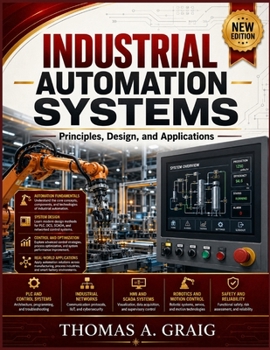
Industrial Automation System: Principles, Design, and Applications

Industrial automation is transforming the way the world manufactures, produces energy, manages infrastructure, and operates critical industrial facilities. Behind every intelligent factory, automated production line, robotic assembly cell, and digitally connected plant lies a carefully engineered automation system designed for reliability, precision, safety, and efficiency.
Industrial Automation Systems: Principles, Design, and Applications is a comprehensive engineering textbook that takes readers from automation fundamentals to the advanced technologies driving today's Industry 4.0 revolution.
Rather than focusing on isolated technologies, this book explains how complete industrial automation systems are designed, integrated, programmed, commissioned, protected, and maintained throughout their entire lifecycle.
Inside, you'll develop a solid understanding of:
Industrial automation architecture and system designSensors, instrumentation, and measurement systemsSignal conditioning and data acquisitionPneumatic, hydraulic, and electric actuatorsPLC architecture and IEC 61131-3 programmingPID control, advanced process control, and batch automationSCADA, DCS, HMI, Industrial Ethernet, and OPC UAIndustrial networking and communication systemsFunctional safety, cybersecurity, and IEC standardsReliability engineering, commissioning, and maintenanceIndustrial IoT (IIoT), analytics, digital twins, and smart manufacturingDesigned for engineering students, automation engineers, control engineers, system integrators, manufacturing professionals, and anyone building expertise in industrial control systems, this book combines engineering theory with practical design methods, real-world examples, industry standards, and engineering best practices.
Whether you're studying industrial automation, designing modern control systems, or expanding your professional expertise, this textbook provides the practical knowledge and engineering insight needed to design reliable, efficient, and future-ready automation solutions.
Customer Reviews
ThriftBooks ® and the ThriftBooks ® logo are registered trademarks of Thrift Books Global, LLC
