


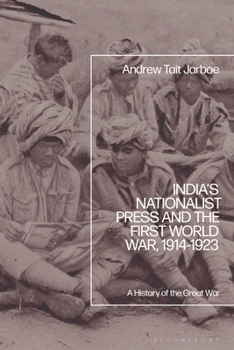
India's Nationalist Press and the First World War, 1914-1923: A History of the Great War

Using translated Indian newspapers and reports on the Indian press created by British civil servants, this book investigates why World War One was a watershed moment in the history of British colonial rule in India, and South Asia more generally.
This rich and under-utilised archive of newspapers demonstrates that India was awash with commentary about World War One from the moment Britain declared war with Germany in 1914, and charts the gradual change in attitude towards the conflict itself, as well as India's future relationship with Britain, amongst contemporary readers and writers. While established scholarship considers the fact that World War One spelt the end for the British Empire and India's position within it as an established truth, this book uses newspapers and civil servant reports to ask why, and how this came to be.
Offering a detailed reading of archival sources, this book links India's path to independence with reports of heavy Indian casualties in the Middle East, stalemate on the Western Front, and demands for increased autonomy in Britain's other colonies. It also answers important questions; What was it like trying to follow the war's events in wartime India? What developments mattered to Indian newspaper editors and their readers? What debates did the war engender? What did people in India do with the news they consumed? In doing so, it recovers marginalised voices within histories of World War One, helping to decentre a euro-centric approach and build a clearer picture of experiences of this conflict across the Empire.
Related Subjects
HistoryCustomer Reviews
ThriftBooks ® and the ThriftBooks ® logo are registered trademarks of Thrift Books Global, LLC
