


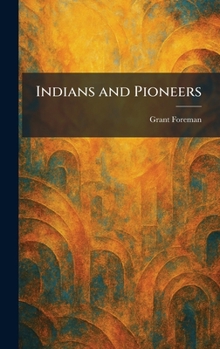
Indians and Pioneers

"Indians and Pioneers" is an authoritative historical study documenting the early interactions between Native American tribes and white settlers in the American Southwest prior to 1830. Written by renowned historian Grant Foreman, the work focuses on the territory that would become Oklahoma and Arkansas, detailing the lives of the Cherokee, Osage, and other indigenous peoples alongside the pioneers, traders, and soldiers who entered their lands. Through a rigorous examination of historical records, the book explores the cultural, political, and military conflicts that characterized the pre-removal frontier.
The narrative provides a comprehensive look at the daily struggles and diplomatic tensions of the era, illustrating the complex dynamics of the Old Southwest. By emphasizing the historical significance of these early encounters, "Indians and Pioneers" offers deep insights into the foundations of American westward expansion and the evolution of federal Indian policy. This work stands as a critical resource for understanding the transformative period that preceded the Trail of Tears and the shifting landscape of the early nineteenth-century American frontier.
This work has been selected by scholars as being culturally important, and is part of the knowledge base of civilization as we know it. This work was reproduced from the original artifact, and remains as true to the original work as possible. Therefore, you may see the original copyright references, library stamps (as most of these works have been housed in our most important libraries around the world), and other notations in the work.
This work is in the public domain in the United States of America, and possibly other nations. Within the United States, you may freely copy and distribute this work, as no entity (individual or corporate) has a copyright on the body of the work.
As a reproduction of a historical artifact, this work may contain missing or blurred pages, poor pictures, errant marks, etc. Scholars believe, and we concur, that this work is important enough to be preserved, reproduced, and made generally available to the public. We appreciate your support of the preservation process, and thank you for being an important part of keeping this knowledge alive and relevant.
Related Subjects
HistoryCustomer Reviews
ThriftBooks® and the ThriftBooks® logo are registered trademarks of Thrift Books Global, LLC
