


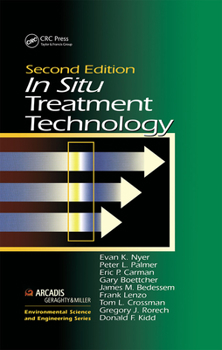
In Situ Treatment Technology


Select Format
Select Condition 
Book Overview
This second edition of the best-selling In Situ Treatment Technology serves as an even more comprehensive reference source. It provides an understanding of technologies, their strengths and limitations, and the details necessary to implement them. The latest EPA and DOD updates and the new detailed design sections provide the information necessary to design a full-scale treatment system. Design examples, including detailed calculations, make this new edition the perfect resource for the practicing remediation specialist as well as a suitable text for advanced courses. The volume includes new chapters on reactive zone technology, phytoremediation, and future limitations of in situ technologies.
Format:Hardcover
Language:English
ISBN:1566705282
ISBN13:9781566705288
Release Date:December 2000
Publisher:CRC Press
Length:548 Pages
Weight:0.97 lbs.
Dimensions:1.2" x 6.3" x 9.4"
Customer Reviews
1 rating
I like it
Published by Thriftbooks.com User , 22 years ago
This book does a good job of discussing why groundwater extraction (pump and treat or whatever else you want to call it) is not useful for cleanup of petroleum contaminated sites, rendering it best suited for hydraulic control of plumes. The author also has a pretty good discussion regarding lifecycle design considerations and the various steps to go through/questions to ask with regard to effluent treatment and equipment sizing. Some of the technology descriptions appears to be taken from design of remediation systems by suthersan, but both books were published by the same company so i guess that shouldn't really be a surprise. Both books offer different perspectives, so I find them both to be pretty useful, however, I like this one a little more because the author seems to be more of a practical guy whereas suthersan is more theoretical.I would recommend this book to anyone interested in expanding their knowledge of the design and correct application of remediation technologies.
Copyright © 2026 Thriftbooks.com Terms of Use
| Privacy Policy | Do Not
Sell/Share My Personal Information | Cookie Policy | Cookie Preferences | Accessibility Statement
ThriftBooks® and the ThriftBooks® logo are registered trademarks of Thrift Books Global, LLC
ThriftBooks® and the ThriftBooks® logo are registered trademarks of Thrift Books Global, LLC
