


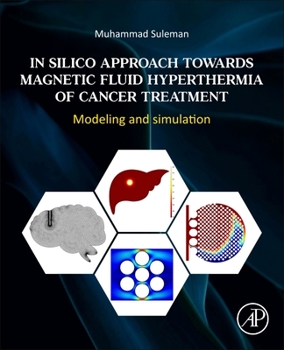
In Silico Approach Towards Magnetic Fluid Hyperthermia of Cancer Treatment: Modeling and Simulation

Nanotechnology has the potential to present a more targeted approach to provide effective improvements for the treatment of cancer patients. Currently, radiotherapy, chemotherapy, surgery, and immunotherapy have been used as cancer treatment modalities, but these traditional treatment techniques are subjected to drawbacks of killing normal cells of the body, whereas magnetic fluid hyperthermia is the therapeutic modality that possesses the ability to overcome these drawbacks. In this therapeutic technique, magnetic nanoparticles are injected into the tumor and after their diffusion in the tumor, the external magnetic field is applied to heat the magnetic nanoparticles.
In Silico Approach Towards Magnetic Fluid Hyperthermia in Cancer Treatment: Modeling and Simulation presents mathematical modeling and simulation approaches contrary to costly and time consuming in-vivo and in-vitro studies. Finite element method-based models of all hyperthermia processes of liver, brain, and breast tumors are simulated on COMSOL Multiphysics software. Problems of constant versus variable heat sources, the backflow problem, the enhanced permeation and retention effect, the flow around Happel's sphere in cells model structure, the deformation effect in poroelastic brain tumor, 3D flow through porous tissue, the reacting nanofluid flows, and optimization of parameters have been simulated for quantitative analysis. This important reference aids in hyperthermia treatment planning in clinical applications and provides an important compendium for practitioners as well as non-medical practicing scientists and engineers and is resource for both research and medical practice in hyperthermia treatment planning in clinical applications.
Customer Reviews
ThriftBooks® and the ThriftBooks® logo are registered trademarks of Thrift Books Global, LLC
