


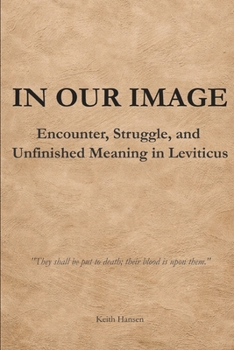
In Our Image: Encounter, Struggle, and Unfinished Meaning in Leviticus

In Our Image: Leviticus is not a Christian devotional, apologetic, or statement of doctrine.
It is a slow, attentive reading of one of the Bible's most misunderstood books-approaching Leviticus not as a rulebook to be defended or discarded, but as an ancient record of how a people tried to live in proximity to the sacred.
Rather than explaining the laws away or forcing them into modern moral frameworks, this book sits with the text as it is: dense, repetitive, bodily, symbolic, and often uncomfortable. It treats Leviticus as unresolved and deeply human-a work shaped by fear, reverence, survival, and the ongoing question of how holiness might be practiced in ordinary life.
Have you ever wondered why Leviticus focuses so intensely on bodies, blood, food, boundaries, and ritual?
Have you felt that this book must be important, but inaccessible-spoken about far more often than actually listened to?
This volume is written for readers who sense that Leviticus is less about moral perfection and more about proximity: how ancient people negotiated order and chaos, purity and danger, belonging and exclusion, while living with a God they believed was near, powerful, and not easily contained.
In Our Image: Leviticus does not seek to harmonize the text with later theology or modern values. Instead, it offers a careful reading that honors the book's strangeness, its seriousness, and its insistence that meaning emerges not from certainty, but from practice, repetition, and lived relationship.
For those curious about the Bible but wary of inherited interpretations, this book invites you to slow down-and to encounter Leviticus not as an obstacle to faith or reason, but as a window into how humans have long struggled to make the sacred livable.
Customer Reviews
ThriftBooks® and the ThriftBooks® logo are registered trademarks of Thrift Books Global, LLC
