


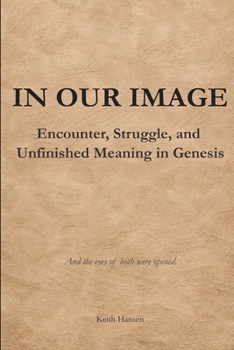
In Our Image: Encounter, Struggle, and Unfinished Meaning in Genesis

In Our Image is not a Christian devotional, apologetic, or statement of doctrine.
It is a slow, contemplative reading of the opening chapters of Genesis that approaches the text as ancient, unresolved, and deeply human. Rather than offering answers to defend belief, this book lingers with the stories themselves, allowing their tensions, ambiguities, and unanswered questions to remain visible.
Have you ever been curious about the Bible, but hesitant to explore it outside of mainstream Christian interpretation?
Have you wondered what Genesis might say if read without doctrinal pressure or the need to arrive at approved conclusions?
This book is written for readers who sense that Genesis functions less as a source of settled answers and more as a beginning-a text shaped by encounter, struggle, and early attempts to understand origin, responsibility, and relationship in a fragile world.
Moving slowly through the creation narratives, the fall, and the earliest stories of humanity, In Our Image examines Genesis through symbolic, ecological, psychological, and historical lenses. Familiar passages are revisited without the goal of harmonizing contradictions or reinforcing belief. Instead, the text is treated as a record of lived questioning, preserved precisely because its meaning was never fully resolved.
This book may resonate with:
readers interested in non-literal or symbolic approaches to scripture
those curious about the ancient Near Eastern context of Genesis
seekers drawn to contemplative, mythic, or ecological readings
readers who feel alienated by rigid religious frameworks but still find the biblical text compelling
This book may not be a good fit for readers seeking:
traditional Christian teaching or devotional material
doctrinal clarity or moral instruction
a defense of biblical inerrancy
faith-affirming or apologetic interpretation
In Our Image does not attempt to tell readers what to believe. It invites them to sit with one of humanity's most influential texts without certainty, pressure, or expectation-and to consider what it might still be saying when doctrine is set aside.
Customer Reviews
ThriftBooks® and the ThriftBooks® logo are registered trademarks of Thrift Books Global, LLC
