Truman Capote's masterpiece of true crime, intensely researched and vividly atmospheric--"as it if were happening before the reader's] very eyes" (Time)"Harrowing . . . The best documentary account of an American crime ever written. . . . The book chills the blood and exercises the intelligence."--The New York Times Book Review On November 15th, 1959, Richard Eugene Hickock and Perry Edward Smith brutally murdered the Clutter family in Holcomb, Kansas. This superb work, an exhaustively researched narrative of the lives of the family and the men who killed them, created a sensation when it was first published, serially, in The New Yorker in 1965. Perry Smith is one of the great dark characters of American literature, full of contradictory emotions. "I thought he was a very nice gentleman," he says of Herb Clutter. "Soft-spoken. I thought so right up to the moment I cut his throat." Told in chapters that alternate between the Clutter household and the approach of Smith and Hickock in their black Chevrolet, then between the investigation of the case and the killers' flight, Capote's account is so detailed that the reader comes to feel almost like a participant in the events.
When Truman Capote debuted on the New York literary scene in 1948, no one had seen anything quite like him. Capote soon became famous for his intensely readable and nuanced short stories, novels, and novellas, but he was equally famous as a personality, gadfly, and bon vivant -- not to mention as a crime writer. Capote s much-imitated 1965 book, In Cold Blood , all but invented the narrative true-crime genre.
Capote describes the events leading up to and after the clutter family murders, respectful, compelli
By RAngeline, October 31, 2022
Verified Purchase
Respectfully written telling of the 1950s murder of the Clutter family. Capote does a wonderful, yet careful, job detailing the parties and events leading up to and after the murders.
4
★★★★★
Intoxicating
By Derry, January 27, 2022
From chapter one the reader is pulled into a world of intense violence and ignorance in as fluid and informative manner as only capote could.
5
★★★★★
Chilling and Disturbing = Fantastic Read
By Mlove221, April 30, 2020
Truman Capote spent four years writing "In Cold Blood" and the fruits of his labor are beyond amazing. From the very beginning you're entranced by the Clutters' lives and how they came to a halt on that terrible night. Interweaving facts from the case with his own imagining of how things may have played out, Capote horrifies and shocks his readers with a murder that shouldn't have happened to begin with.
2
★★★★★
Great writing holds you captive
By Thriftbooks.com User, May 12, 2016
Verified Purchase
2
★★★★☆
Superbly Written
By Thriftbooks.com User, November 21, 2009
In Cold Blood follows the true murder of the Clutters in Holcomb, Kansas, 1959. This non fiction work is told from a couple of perspectives: - The Clutters, on the day of the murder. You follow them throughout their daily routine, an attempt to see the world through their eyes. - Perry Smith & Dick Hickock: the Lansing cell mates, released on parole, and who teamed up and comitted the 4 murders. - Detective Al Dewey as he tries to connect the dots and find who had killed the Clutters and why. I expected the book to be a fast paced one, where clues would be found every couple of pages and so on. But the fact that you know who the murderers are from the beginning made this a more leisurely paced read, and where you only know the full details of what happened towards the end. The writing style, and the change in narrators made it feel like a work of fiction (and as you read, you really wish it were fiction). I didn't want to feel any empathy for Perry and Dick, and although Capote forces you to see that they had problems, you are left to decide whether you feel for them or not. Towards the end of the book, two works of fiction sprang to mind because of something Perry said. "He used to say that all crimes were "varieties of theft". Murder included." That instantly brought The Kite Runner by Khaled Hosseini to mind; I remember the father was talking to the protagonist and said something similar to that. Also, later when Perry talks about how he's sorry that he's lost his freedom but not sorry for the crime (that he doesn't really feel anything), I couldn't help but remember Mersault from The Outsider by Albert Camus. The only thing I wish had been dealt with more was the 'why' of the murders. Yes, we got to know about Perry's difficult childhood and Dick's injury, but I guess what I wanted was something unrealistic, a clear cut answer of why what happened happened. And these kinds of things seem to never have answers.
10
★★★★★
In Cold Type...
By Thriftbooks.com User, March 25, 2006
Truman Capote's 'In Cold Blood' is enjoying a resurgence of popularity thanks to the Oscar-winning film depicting the author's life and work during the writing of this phenomenal piece. At one point in the film, the character Capote makes the statement that when he thinks about how good this book will be, he can hardly breathe. Perhaps it is because it is part of our history now, I don't consider the book to be that good, but it was a work fairly close to groundbreaking in its impact - it was a new genre, the narrative telling of a non-fiction event as if it were a fictional novel. The narrative centres upon the murder of a Kansas family by two men, Perry Smith and Dick Hicock, who are in many ways far from typical killers, much less cold blooded killers. The family, the Clutters of Holcombe, Kansas, are far from typical victims, nor is this the kind of place such a murder would be expected. Capote does a remarkable job at an even-handed analysis and narrative treatment of all the characters, from the family itself to the townspeople and investigators, as well as the murderers themselves. Perhaps it is because he found an area of identification? This is a psychological thriller of a sort - at least it would be, were it not a true life tale. Getting into the minds of the criminals and the investigators was no easy task for Capote, but what comes forth on the page is very crisp and insightful reporting, without the kinds of embellishments one might expect from a figure such as Capote when dealing with middle-America folk. The question of why for the killing is still never fully resolved, despite Capote's attempt to set out all the story and psychological detail. Perhaps this is as strange as the interest Capote took in the subject in the first place, as well as the effect it had on him, and those around him, ultimately - while Capote himself never again finished a major project after this, that is also true of his assistant, Nell Harper Lee, whose book 'To Kill a Mockingbird' (done about the same time as 'In Cold Blood') was also her last major writing. A worthwhile book in many ways.
After meeting a century ago,C. S. LewisandJ. R. R. Tolkienbonded over their shared love for mythology, poetry, languages, and storytelling. The twoestablisheda literary discussion group and were instrumental in encouraging each other's groundbreaking works of fantasy. Learn about theirstoriedfriendship and ten moresuch literaryliaisons.
Published by Ashly Moore Sheldon•September 7, 2025
As we welcome the month ahead, we're shining a light on notable and acclaimed September-born authors. We're delighted to celebrate them and their beloved works of fiction, nonfiction, poetry, theater, and more.
Published by ThriftBooks and Likewise•May 11, 2025
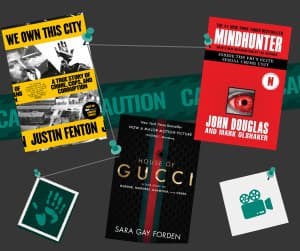
Explore the gripping true crime narratives that have captivated audiences everywhere, inspiring both acclaimed television series and films. Just be prepared to not get any sleep for a while...
Hello Boils and Ghouls! The Thrift Keeper here (named for my devilish ability to find the Best Bargains among Blood-Curdling titles!), and today in honor of the movie Renfield I’d like to talk to you about the importance of FRIENDSHIP...
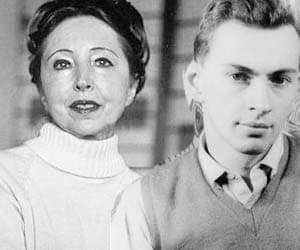
Casting disparaging remarks about contemporaries seems to be a hallmark of great writers. Afterall, Andre Gide could never decide if he worshiped at the shrine of Oscar Wilde, or despised his poisoned pen flamboyance. Particularly among the post World War II American writers that published so prolifically, they measured their own success by the personal failures of their fellow writers. Here we offer a peek at some of the most enduring feuds of writers like Gore Vidal and Anais Nin.