


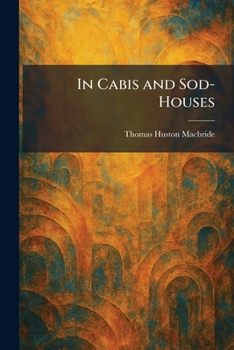
In Cabis and Sod-Houses

Select Format
Select Condition 
Book Overview
"In Cabis and Sod-Houses" is a vivid and evocative portrayal of life on the American frontier during the formative years of Iowa's settlement. Authored by the esteemed educator and naturalist Thomas Huston Macbride, this work serves as a literary bridge to the mid-nineteenth century, capturing the lived experiences of the pioneers who first settled the vast prairies of the Midwest.
Through a series of detailed sketches, the book explores the daily realities of frontier existence, from the construction of primitive sod dwellings and log cabins to the establishment of the first schools and community centers. Macbride provides a unique perspective that combines historical reminiscence with the keen eye of a scientist, offering insights into the natural history of the region and the profound changes wrought by human cultivation. The narrative emphasizes the resilience and communal spirit of the early settlers as they navigated the challenges of a wild, untamed landscape.
This work remains a significant resource for those interested in Iowa history, American pioneer life, and the social development of the Great Plains. It offers a nostalgic yet informative look at the foundations of Midwestern society and the enduring legacy of the men and women who built homes in the cabins and sod-houses of the prairie.
This work has been selected by scholars as being culturally important, and is part of the knowledge base of civilization as we know it. This work was reproduced from the original artifact, and remains as true to the original work as possible. Therefore, you may see the original copyright references, library stamps (as most of these works have been housed in our most important libraries around the world), and other notations in the work.
This work is in the public domain in the United States of America, and possibly other nations. Within the United States, you may freely copy and distribute this work, as no entity (individual or corporate) has a copyright on the body of the work.
As a reproduction of a historical artifact, this work may contain missing or blurred pages, poor pictures, errant marks, etc. Scholars believe, and we concur, that this work is important enough to be preserved, reproduced, and made generally available to the public. We appreciate your support of the preservation process, and thank you for being an important part of keeping this knowledge alive and relevant.
Customer Reviews
ThriftBooks ® and the ThriftBooks ® logo are registered trademarks of Thrift Books Global, LLC
