


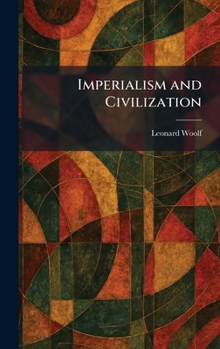
Imperialism and Civilization

"Imperialism and Civilization" is a profound examination of the structural and ethical conflicts inherent in the expansion of European powers during the early twentieth century. Written by the influential political theorist and Bloomsbury Group figure Leonard Woolf, this work dissects the complex relationship between dominant Western states and the diverse civilizations of Asia and Africa. Woolf argues that the global spread of European political and economic systems created a unique crisis for indigenous cultures, forcing a confrontation that redefined the modern world.
The book provides a critical analysis of the "civilizing mission" often used to justify colonial rule, exploring how imperialist policies impacted social structures, sovereignty, and international stability. Woolf offers a pioneering perspective on the League of Nations' mandate system and the emerging voices of nationalist movements seeking self-determination. This text remains a vital contribution to political science and history, offering a clear-eyed assessment of the tensions between global integration and imperial exploitation. "Imperialism and Civilization" is essential reading for those interested in the history of international relations, the evolution of anti-colonial thought, and the historical roots of contemporary global politics.
This work has been selected by scholars as being culturally important, and is part of the knowledge base of civilization as we know it. This work was reproduced from the original artifact, and remains as true to the original work as possible. Therefore, you may see the original copyright references, library stamps (as most of these works have been housed in our most important libraries around the world), and other notations in the work.
This work is in the public domain in the United States of America, and possibly other nations. Within the United States, you may freely copy and distribute this work, as no entity (individual or corporate) has a copyright on the body of the work.
As a reproduction of a historical artifact, this work may contain missing or blurred pages, poor pictures, errant marks, etc. Scholars believe, and we concur, that this work is important enough to be preserved, reproduced, and made generally available to the public. We appreciate your support of the preservation process, and thank you for being an important part of keeping this knowledge alive and relevant.
Customer Reviews
ThriftBooks ® and the ThriftBooks ® logo are registered trademarks of Thrift Books Global, LLC
