


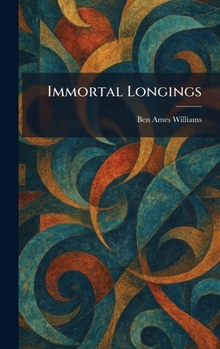
Immortal Longings

"Immortal Longings" is a poignant exploration of the search for meaning and the enduring pull of one's roots. The story follows June Heritage, a man who has achieved significant wealth and success in the urban corporate world but finds himself increasingly disillusioned with the superficiality of his life. Seeking a sense of peace that his professional triumphs have failed to provide, he returns to the quiet, rugged landscape of his childhood home in rural Maine.
As Heritage works to restore his ancestral estate, the novel delves into the deep contrasts between the relentless pace of modern city life and the steady, rhythmic traditions of the countryside. Through his interactions with the local community and the reawakening of long-dormant memories, he begins to reconcile his past with his present. Ben Ames Williams offers a masterfully written character study that examines the complexities of the American identity, the weight of family legacy, and the universal desire for spiritual fulfillment. "Immortal Longings" remains a compelling narrative about the courage required to abandon a hollow success in favor of a more authentic and grounded existence.
This work has been selected by scholars as being culturally important, and is part of the knowledge base of civilization as we know it. This work was reproduced from the original artifact, and remains as true to the original work as possible. Therefore, you may see the original copyright references, library stamps (as most of these works have been housed in our most important libraries around the world), and other notations in the work.
This work is in the public domain in the United States of America, and possibly other nations. Within the United States, you may freely copy and distribute this work, as no entity (individual or corporate) has a copyright on the body of the work.
As a reproduction of a historical artifact, this work may contain missing or blurred pages, poor pictures, errant marks, etc. Scholars believe, and we concur, that this work is important enough to be preserved, reproduced, and made generally available to the public. We appreciate your support of the preservation process, and thank you for being an important part of keeping this knowledge alive and relevant.
Customer Reviews
ThriftBooks® and the ThriftBooks® logo are registered trademarks of Thrift Books Global, LLC
