


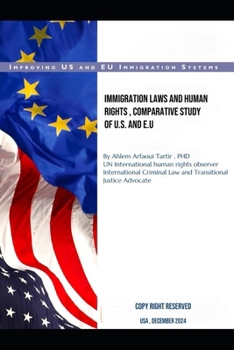
Immigration Laws and Human Rights Comparative Study of U.S. and E.U
No Customer Reviews

Human rights and immigration laws are closely intertwined, as immigration policies and
practices can significantly impact the rights of individuals. Here are some key points that
illustrate the relationship between human rights and immigration laws:
1. International Human Rights Framework
- Various international treaties and conventions, such as the Universal
Declaration of Human Rights (UDHR), the International Covenant on Civil and Political
Rights (ICCPR), and the Convention on the Rights of the Child (CRC), outline fundamental
human rights that should be respected regardless of immigration status.
- These documents emphasize the right to seek asylum, the right to life, and
protection from torture and inhumane treatment.
2. Right to Asylum
- Under the 1951 Refugee Convention and its 1967 Protocol, individuals
fleeing persecution have the right to seek asylum in another country. States are obligated to
assess asylum claims fairly and provide protection to those who qualify.
3. Non-Refoulement Principle
- The principle of non-refoulement prohibits countries from returning
individuals to a country where they may face persecution, torture, or inhumane treatment.
This is a fundamental aspect of international refugee law.
4. Rights of Migrants
- The International Convention on the Protection of the Rights of All Migrant
Workers and Members of Their Families (ICMW) outlines the rights of migrant workers and
their families, emphasizing the need for fair treatment regardless of immigration status.
- Migrants should have access to basic rights, including healthcare, education,
and legal protection.
5. Detention and Due Process
- Immigration detention practices must comply with human rights standards.
Individuals have the right to due process, including the right to challenge their detention
and access legal representation.
- Prolonged or arbitrary detention can violate human rights, and alternatives to
detention should be considered.
6. Family Unity
- Immigration laws should respect the right to family unity. Many international
human rights instruments advocate for the protection of family life, and immigration
policies should not unduly separate families.
7. Discrimination and Equal Treatment
- Immigration laws must be applied without discrimination based on race,
nationality, gender, or other protected characteristics. Human rights law prohibits
discriminatory practices in immigration enforcement and policy.
8. Human Rights Violations
- Many countries face criticism for human rights violations in the context of
immigration, such as excessive use of force by border enforcement, inadequate living
conditions in detention centers, and failure to provide adequate legal protections for
asylum seekers.
9. Impact of National Policies
- National immigration laws can either uphold or violate human rights. Policies
that prioritize security over human rights can lead to abuses, while those that emphasize
humane treatment and protection can foster respect for individuals' rights.
Conclusion
The intersection of human rights and immigration laws highlights the necessity for
countries to balance their immigration control measures with their obligations to uphold
human rights. Effective immigration policies should ensure that the rights of all individuals,
regardless of their immigration status, are respected and protected
practices can significantly impact the rights of individuals. Here are some key points that
illustrate the relationship between human rights and immigration laws:
1. International Human Rights Framework
- Various international treaties and conventions, such as the Universal
Declaration of Human Rights (UDHR), the International Covenant on Civil and Political
Rights (ICCPR), and the Convention on the Rights of the Child (CRC), outline fundamental
human rights that should be respected regardless of immigration status.
- These documents emphasize the right to seek asylum, the right to life, and
protection from torture and inhumane treatment.
2. Right to Asylum
- Under the 1951 Refugee Convention and its 1967 Protocol, individuals
fleeing persecution have the right to seek asylum in another country. States are obligated to
assess asylum claims fairly and provide protection to those who qualify.
3. Non-Refoulement Principle
- The principle of non-refoulement prohibits countries from returning
individuals to a country where they may face persecution, torture, or inhumane treatment.
This is a fundamental aspect of international refugee law.
4. Rights of Migrants
- The International Convention on the Protection of the Rights of All Migrant
Workers and Members of Their Families (ICMW) outlines the rights of migrant workers and
their families, emphasizing the need for fair treatment regardless of immigration status.
- Migrants should have access to basic rights, including healthcare, education,
and legal protection.
5. Detention and Due Process
- Immigration detention practices must comply with human rights standards.
Individuals have the right to due process, including the right to challenge their detention
and access legal representation.
- Prolonged or arbitrary detention can violate human rights, and alternatives to
detention should be considered.
6. Family Unity
- Immigration laws should respect the right to family unity. Many international
human rights instruments advocate for the protection of family life, and immigration
policies should not unduly separate families.
7. Discrimination and Equal Treatment
- Immigration laws must be applied without discrimination based on race,
nationality, gender, or other protected characteristics. Human rights law prohibits
discriminatory practices in immigration enforcement and policy.
8. Human Rights Violations
- Many countries face criticism for human rights violations in the context of
immigration, such as excessive use of force by border enforcement, inadequate living
conditions in detention centers, and failure to provide adequate legal protections for
asylum seekers.
9. Impact of National Policies
- National immigration laws can either uphold or violate human rights. Policies
that prioritize security over human rights can lead to abuses, while those that emphasize
humane treatment and protection can foster respect for individuals' rights.
Conclusion
The intersection of human rights and immigration laws highlights the necessity for
countries to balance their immigration control measures with their obligations to uphold
human rights. Effective immigration policies should ensure that the rights of all individuals,
regardless of their immigration status, are respected and protected
Format:Paperback
Language:English
ISBN:B0F4QT36SC
ISBN13:9798319315953
Release Date:April 2025
Publisher:Independently Published
Length:144 Pages
Weight:0.61 lbs.
Dimensions:0.4" x 6.0" x 9.0"
Related Subjects
LawCustomer Reviews
0 rating
Copyright © 2026 Thriftbooks.com
Terms of Use | Privacy Policy | Do Not Sell/Share My Personal Information | Cookie Policy | Cookie Preferences | Accessibility Statement
ThriftBooks ® and the ThriftBooks ® logo are registered trademarks of Thrift Books Global, LLC
ThriftBooks ® and the ThriftBooks ® logo are registered trademarks of Thrift Books Global, LLC
