


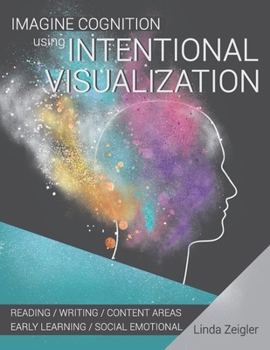
Imagine Cognition using Intentional Visualization: Reading, Writing, Content Areas, Early Learning, Social Emotional
No Customer Reviews

Imagine Cognition using Intentional Visualization prepares educators to purposely use visualization as a strategy, a skill, and an approach to intentionally increase understanding and application of cognitive skills. It clarifies how an awareness of personal imagery and the imagery of others creates a positive learning environment engaging students and enhancing social emotional development. Ultimately, this book is intended to change each educator's and each student's mindset and response for learning, choosing imagery to advance cognition. This book expands educators' awareness of visualization by providing ways to purposefully integrate it into common classroom practices. It also offers Visualization Concepts which provide a framework of instruction with explicit imagery goals for readers, writers, content area students, early learners, and social emotional development. Research and analysis of students' cognitive struggles during learning performances helped identify and clarify each imagery goal. This new approach helps educators "get into students' heads." Imagery discussions provide a personal connection, not only to what a student knows but to who he/she is as a person. Teachers assess thinking and set individual expectations which incorporates an awareness, understanding, and application of imagery. Educators recognize its influence on rigorous thinking and respond to personal needs by tailoring visualization instruction. This text shares authentic testimony from various stakeholders, connecting that feedback to current research. It offers an opportunity for educators to reflect and evaluate their personal understanding and use of visualization. Tools for student assessment, lesson design, and responsive instruction are interwoven within the text and shared in the appendix. There are three main sections of the text: Discovery, Implementation, and Results. Each section discloses a connection regarding the development of visualization skills to cognition.-The Discovery Section explains the history, research, and systematic development of this strategy from the point of view of diverse stakeholders. It identifies various questions that were pursued to advance understanding and use of visualization and acknowledges the need for professional development. -The Implementation Section provides and explains the eleven Visualization Concepts. The concepts address different aspects of cognition which link to each instructional goal. The goals are explained and include examples of learning experiences for reading, writing, content areas, early learners, and social emotional development.-The Results Section reveals both quantitative, measurable assessment data, and qualitative, testimonies and descriptions of teacher and student progress.Learning and innovation skills are being recognized as the abilities that prepare students for success in the 21st Century. These skills include creativity, critical thinking, communication, and collaboration. Each of these skills are influenced by the ability of a learner to effectively visualize. Today's students may have careers not invented yet. However, we do know that experts in their chosen fields successfully visualize details within their professions. Therefore, if we teach students "how" to apply visualization within the learning process, students can choose to use visualization to increase their knowledge and abilities within any discipline they pursue.Intentional Visualization is a "minds-on" strategy that improves cognition for students at all grade levels and in all subject areas. It is a skill that can be improved when taught intentionally. Instructors learn to integrate visualization as an approach to increase engagement, stimulate metacognition, motivate learners, and develop classroom culture.
Format:Paperback
Language:English
ISBN:1074121813
ISBN13:9781074121815
Release Date:July 2019
Publisher:Independently Published
Length:202 Pages
Weight:1.06 lbs.
Dimensions:0.4" x 8.5" x 11.0"
Customer Reviews
0 rating
Copyright © 2026 Thriftbooks.com Terms of Use
| Privacy Policy | Do Not
Sell/Share My Personal Information | Cookie Policy | Cookie Preferences | Accessibility Statement
ThriftBooks® and the ThriftBooks® logo are registered trademarks of Thrift Books Global, LLC
ThriftBooks® and the ThriftBooks® logo are registered trademarks of Thrift Books Global, LLC
