


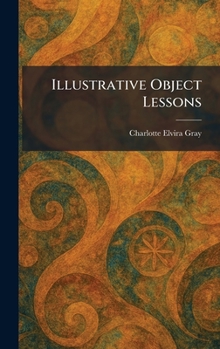
Illustrative Object Lessons

"Illustrative Object Lessons" is a comprehensive guide designed to aid educators, parents, and clergy in communicating profound spiritual truths to young minds. This work focuses on the pedagogical method of the "object lesson"-the practice of using tangible, everyday items to demonstrate abstract moral and religious concepts. By bridging the gap between the physical and the spiritual, the book provides a wealth of practical examples and structured narratives that make complex theological themes accessible and engaging for children.
The lessons contained within are crafted to capture the imagination, utilizing simple metaphors to instill values such as faith, integrity, and kindness. Each chapter offers a different illustrative tool, ranging from household objects to elements of nature, paired with clear instructions on how to present them effectively in a classroom or home setting. This collection serves as an invaluable resource for anyone involved in Christian education, offering a timeless approach to religious instruction that emphasizes clarity, visualization, and active participation. "Illustrative Object Lessons" remains a significant contribution to devotional literature, reflecting the enduring importance of creative storytelling in the development of character and spiritual understanding.
This work has been selected by scholars as being culturally important, and is part of the knowledge base of civilization as we know it. This work was reproduced from the original artifact, and remains as true to the original work as possible. Therefore, you may see the original copyright references, library stamps (as most of these works have been housed in our most important libraries around the world), and other notations in the work.
This work is in the public domain in the United States of America, and possibly other nations. Within the United States, you may freely copy and distribute this work, as no entity (individual or corporate) has a copyright on the body of the work.
As a reproduction of a historical artifact, this work may contain missing or blurred pages, poor pictures, errant marks, etc. Scholars believe, and we concur, that this work is important enough to be preserved, reproduced, and made generally available to the public. We appreciate your support of the preservation process, and thank you for being an important part of keeping this knowledge alive and relevant.
Customer Reviews
ThriftBooks ® and the ThriftBooks ® logo are registered trademarks of Thrift Books Global, LLC
