


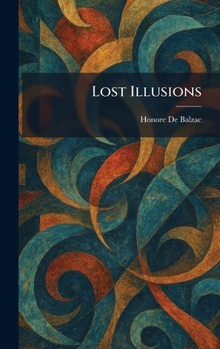


Book Overview
"Lost Illusions" is one of Honor de Balzac's most celebrated masterpieces, forming a central pillar of his monumental series "The Human Comedy". This sweeping narrative follows the trajectory of Lucien Chardon, a talented and ambitious young poet from the provinces who travels to Paris in search of literary fame and social prestige. As Lucien navigates the treacherous waters of the capital, he is confronted by the harsh realities of the publishing world, the corruptive influence of journalism, and the fickle nature of the aristocracy.
Through the contrasting experiences of Lucien and his steadfast friend David S chard-a printer struggling with debt and industrial intrigue back in Angoul ame-Balzac provides a searing critique of a society transitioning into the modern era. The novel brilliantly explores themes of artistic integrity, the commodification of literature, and the loss of innocence in a world driven by profit and vanity. With its rich characterizations and detailed depiction of 19th-century French life, "Lost Illusions" remains a definitive work of realism, offering a timeless meditation on the price of ambition and the fragility of dreams.
This work has been selected by scholars as being culturally important, and is part of the knowledge base of civilization as we know it. This work was reproduced from the original artifact, and remains as true to the original work as possible. Therefore, you may see the original copyright references, library stamps (as most of these works have been housed in our most important libraries around the world), and other notations in the work.
This work is in the public domain in the United States of America, and possibly other nations. Within the United States, you may freely copy and distribute this work, as no entity (individual or corporate) has a copyright on the body of the work.
As a reproduction of a historical artifact, this work may contain missing or blurred pages, poor pictures, errant marks, etc. Scholars believe, and we concur, that this work is important enough to be preserved, reproduced, and made generally available to the public. We appreciate your support of the preservation process, and thank you for being an important part of keeping this knowledge alive and relevant.
Customer Reviews
A Contrast of Genius, or: Bright Lights, Big City
Sacre bleu, the man can write!
"Kokomo Kid Comes a Cropper in Big Smoke"
great, but very very very heavy
A bloody Rorschach representation of any modern industry.
ThriftBooks ® and the ThriftBooks ® logo are registered trademarks of Thrift Books Global, LLC
