


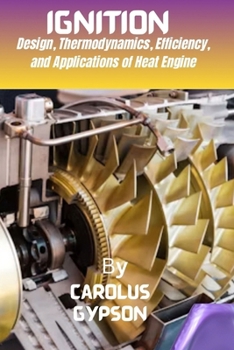
Ignition: Design, Thermodynamics, Efficiency, and Applications of Heat Engine

How does a heat engine transform thermal energy into useful mechanical power? What principles guide its design, and how can its efficiency and performance be improved?
Heat Engine Design: From Thermodynamic Principles to Modern Energy Conversion provides a clear and accessible introduction to the principles, components, analysis, and practical applications of heat engines.
The book takes readers from fundamental concepts to important aspects of practical engine design. It explains how thermodynamics, heat transfer, combustion, materials, and performance analysis work together in the development of heat engine systems.
Inside This Book, You Will Explore: The fundamental principles and operation of heat enginesThe first and second laws of thermodynamicsThermal efficiency, entropy, and energy conversionMajor heat engine cycles, including Otto, Diesel, Brayton, Rankine, and Stirling cyclesImportant engine components and their functionsHeat transfer and combustion processesEngine power, efficiency, fuel consumption, and performance analysisWaste heat recovery, turbocharging, regeneration, and modern technologiesEmissions and approaches to emission controlAlternative fuels and hybrid heat engine systemsPractical heat engine design, testing, and applicationsApplications in transportation systems, power generation, and industryWritten in a straightforward style, this book is designed to make the subject easier to understand without unnecessary complexity. It connects theoretical principles with practical engineering considerations, helping readers develop a broader understanding of how heat engines are designed, evaluated, and improved.
Whether you are exploring heat engine technology for study, professional development, or general technical knowledge, this book provides a useful foundation for understanding the fascinating process of converting heat into useful power.
Discover the principles behind heat engines and explore how engineering turns thermal energy into practical energy conversion.
Customer Reviews
ThriftBooks ® and the ThriftBooks ® logo are registered trademarks of Thrift Books Global, LLC
