


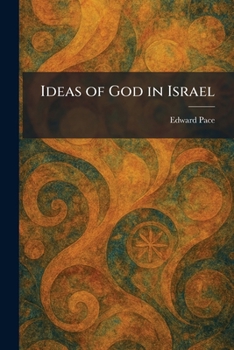
Ideas of God in Israel

"Ideas of God in Israel" offers a scholarly and profound examination of the theological development of the divine concept within ancient Israelite society. Drawing upon biblical texts and historical context, the work traces the evolution of religious thought from early nomadic conceptions to the sophisticated ethical monotheism that characterizes later prophetic literature. Edward Pace explores how the people of Israel understood their relationship with the divine, navigating the transitions between local tribal deity concepts and the universal sovereignty of God.
This study provides critical insights into the cultural and intellectual history of the ancient Near East, highlighting the unique contributions of Israelite theology to the broader religious landscape. By analyzing the language, metaphors, and narratives used to describe God, the author reveals the deep-seated spiritual convictions that shaped the nation's identity and laws. "Ideas of God in Israel" remains a significant resource for students of biblical studies, theology, and ancient history, offering a clear and comprehensive overview of the shifting perceptions of divinity that underpin the foundations of Western religious thought.
This work has been selected by scholars as being culturally important, and is part of the knowledge base of civilization as we know it. This work was reproduced from the original artifact, and remains as true to the original work as possible. Therefore, you may see the original copyright references, library stamps (as most of these works have been housed in our most important libraries around the world), and other notations in the work.
This work is in the public domain in the United States of America, and possibly other nations. Within the United States, you may freely copy and distribute this work, as no entity (individual or corporate) has a copyright on the body of the work.
As a reproduction of a historical artifact, this work may contain missing or blurred pages, poor pictures, errant marks, etc. Scholars believe, and we concur, that this work is important enough to be preserved, reproduced, and made generally available to the public. We appreciate your support of the preservation process, and thank you for being an important part of keeping this knowledge alive and relevant.
Customer Reviews
ThriftBooks ® and the ThriftBooks ® logo are registered trademarks of Thrift Books Global, LLC
