


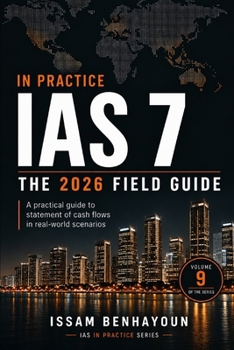
IAS 7 in Practice: The 2026 Essential Guide

IAS 7 in Practice is a practical field guide to applying IAS 7 Statement of Cash Flows in real-world financial reporting. It focuses on the judgements, classifications, reconciliations and documentation required to produce a reliable and defensible cash flow statement.
Rather than reproducing the Standard, this guide translates IAS 7 into practical decisions. It takes readers through operating, investing and financing cash flows, the direct and indirect methods, non-cash transactions, cash and cash equivalents, restricted cash, and the classification of interest, dividends and taxes.
Particular attention is given to areas that frequently create difficulties in practice, including cash-flow classification, bank overdrafts, foreign-currency movements, lease payments, supplier finance arrangements and the distinction between trade payables and borrowings. The guide also addresses the new supplier-finance disclosure requirements effective from 2024.
A major focus is the preparation for IFRS 18, effective from 1 January 2027. The guide explains how IFRS 18 changes the indirect-method reconciliation and the classification of interest and dividends for entities without specified main business activities in investing or financing.
Through practical case studies, workshops, decision checkpoints and working templates, readers learn how to build a cash-flow classification decision tree, supplier finance register, non-cash transaction log, cash-and-cash-equivalents assessment, financing-liability roll-forward and audit-ready evidence file.
Designed for accountants, auditors, CFOs, financial controllers, finance managers, consultants, academics and advanced accounting students, this guide bridges the gap between understanding IAS 7 and producing a cash flow statement that can withstand professional and audit scrutiny.
Customer Reviews
ThriftBooks ® and the ThriftBooks ® logo are registered trademarks of Thrift Books Global, LLC
