


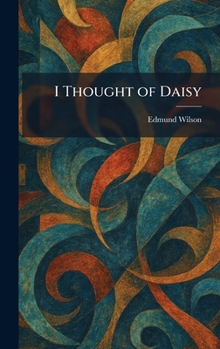
I Thought of Daisy

"I Thought of Daisy" is a sophisticated exploration of the intellectual and social landscape of 1920s New York. Set against the vibrant backdrop of Greenwich Village, Edmund Wilson's novel follows an unnamed narrator as he navigates the contrasting worlds of high-minded literary circles and the more visceral, unpretentious charm of the chorus girl Daisy.
Through a series of encounters and reflections, the work captures the restless energy of the Jazz Age, examining the search for artistic truth and emotional authenticity. Wilson, widely regarded as one of the preeminent critics of the twentieth century, brings a sharp, observant eye to this semi-autobiographical narrative. The novel serves as a vivid portrait of a generation caught between the traditions of the past and the avant-garde experiments of the future.
Readers will find a compelling meditation on the intersection of class, culture, and personal identity during one of the most transformative eras in American urban life. "I Thought of Daisy" remains a significant literary document of the Manhattan intelligentsia and a poignant study of the complexities of romantic and intellectual desire.
This work has been selected by scholars as being culturally important, and is part of the knowledge base of civilization as we know it. This work was reproduced from the original artifact, and remains as true to the original work as possible. Therefore, you may see the original copyright references, library stamps (as most of these works have been housed in our most important libraries around the world), and other notations in the work.
This work is in the public domain in the United States of America, and possibly other nations. Within the United States, you may freely copy and distribute this work, as no entity (individual or corporate) has a copyright on the body of the work.
As a reproduction of a historical artifact, this work may contain missing or blurred pages, poor pictures, errant marks, etc. Scholars believe, and we concur, that this work is important enough to be preserved, reproduced, and made generally available to the public. We appreciate your support of the preservation process, and thank you for being an important part of keeping this knowledge alive and relevant.
Customer Reviews
ThriftBooks ® and the ThriftBooks ® logo are registered trademarks of Thrift Books Global, LLC
