


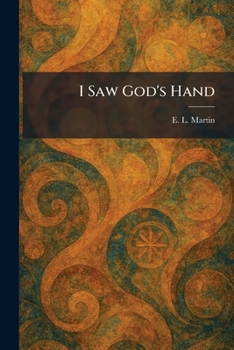
I Saw God's Hand

"I Saw God's Hand" by E.L. Martin is a compelling narrative of faith and divine intervention, offering readers an intimate look into the spiritual journey and experiences of the author. Rooted in a deep sense of religious devotion, the work serves as a powerful testimony to the presence of the divine in everyday life, specifically reflecting the perspectives and spiritual climate of the early twentieth century.
Through a series of personal anecdotes and reflections, Martin illustrates the concept of providence, recounting moments where spiritual guidance and miraculous occurrences shaped his path. The book emphasizes the importance of trust in God's plan, even in the face of uncertainty or hardship. As a historical piece of religious literature, it provides valuable insights into the spiritual life of its era and remains an inspirational resource for those seeking to recognize the movements of the sacred within their own lives.
This work stands as a testament to the power of conviction and the enduring nature of Christian hope. "I Saw God's Hand" continues to resonate with readers interested in memoirs of faith, the history of Adventist thought, and the universal quest for spiritual meaning and reassurance.
This work has been selected by scholars as being culturally important, and is part of the knowledge base of civilization as we know it. This work was reproduced from the original artifact, and remains as true to the original work as possible. Therefore, you may see the original copyright references, library stamps (as most of these works have been housed in our most important libraries around the world), and other notations in the work.
This work is in the public domain in the United States of America, and possibly other nations. Within the United States, you may freely copy and distribute this work, as no entity (individual or corporate) has a copyright on the body of the work.
As a reproduction of a historical artifact, this work may contain missing or blurred pages, poor pictures, errant marks, etc. Scholars believe, and we concur, that this work is important enough to be preserved, reproduced, and made generally available to the public. We appreciate your support of the preservation process, and thank you for being an important part of keeping this knowledge alive and relevant.
Customer Reviews
ThriftBooks ® and the ThriftBooks ® logo are registered trademarks of Thrift Books Global, LLC
