


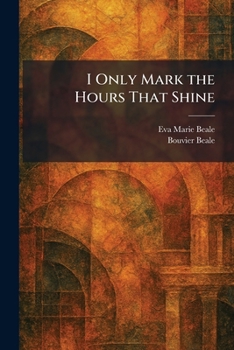
I Only Mark the Hours That Shine

"I Only Mark the Hours That Shine" is a poignant exploration of the legacy and history of the Beale family of Grey Gardens. This work serves as an archive of the personal experiences and cultural surroundings of a family that has captivated the public imagination for decades. The title, taken from a classic sundial inscription, reflects the book's focus on the fleeting nature of time and the preservation of memory within the context of American high society.
The narrative provides an evocative look at the social landscape of the early 20th century, specifically centering on the aristocratic circles of East Hampton. It delves into the nuances of family life, tradition, and the unique personal histories that define the Bouvier-Beale lineage. This book is a significant contribution to the understanding of social history and the personal narratives of figures who are deeply woven into the fabric of American pop culture. By capturing a specific aesthetic and emotional resonance, "I Only Mark the Hours That Shine" remains a valuable read for those interested in historical memoirs and the enduring allure of the Grey Gardens story.
This work has been selected by scholars as being culturally important, and is part of the knowledge base of civilization as we know it. This work was reproduced from the original artifact, and remains as true to the original work as possible. Therefore, you may see the original copyright references, library stamps (as most of these works have been housed in our most important libraries around the world), and other notations in the work.
This work is in the public domain in the United States of America, and possibly other nations. Within the United States, you may freely copy and distribute this work, as no entity (individual or corporate) has a copyright on the body of the work.
As a reproduction of a historical artifact, this work may contain missing or blurred pages, poor pictures, errant marks, etc. Scholars believe, and we concur, that this work is important enough to be preserved, reproduced, and made generally available to the public. We appreciate your support of the preservation process, and thank you for being an important part of keeping this knowledge alive and relevant.
Customer Reviews
ThriftBooks ® and the ThriftBooks ® logo are registered trademarks of Thrift Books Global, LLC
