


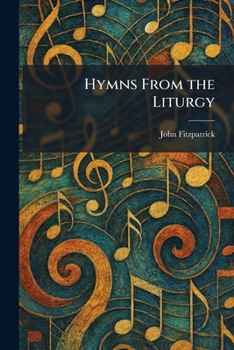
Hymns From the Liturgy

"Hymns From the Liturgy" is a profound collection of sacred verse and song compiled by Rev. John Fitzpatrick. Drawing directly from the rich traditions of ecclesiastical liturgy, this work presents a selection of hymns intended to elevate the spiritual experience of the faithful and provide a poetic bridge to the formal rites of the Church. The volume serves as both a devotional guide and a literary exploration of the lyrical beauty inherent in liturgical prayer.
Throughout the collection, the author captures the essence of traditional worship, offering translations and compositions that reflect the seasonal rhythms and theological depths of the Christian calendar. These hymns are designed not only for communal celebration but also for private meditation, allowing readers to engage more deeply with the sacred texts of the liturgy outside of formal services.
As a significant contribution to Catholic hymnology, "Hymns From the Liturgy" remains a valuable resource for those interested in the history of religious music, the development of liturgical practice, and the enduring power of sacred poetry. Its clear, reverent language makes it accessible to both clergy and laity seeking to enrich their spiritual lives through the timeless tradition of sacred song.
This work has been selected by scholars as being culturally important, and is part of the knowledge base of civilization as we know it. This work was reproduced from the original artifact, and remains as true to the original work as possible. Therefore, you may see the original copyright references, library stamps (as most of these works have been housed in our most important libraries around the world), and other notations in the work.
This work is in the public domain in the United States of America, and possibly other nations. Within the United States, you may freely copy and distribute this work, as no entity (individual or corporate) has a copyright on the body of the work.
As a reproduction of a historical artifact, this work may contain missing or blurred pages, poor pictures, errant marks, etc. Scholars believe, and we concur, that this work is important enough to be preserved, reproduced, and made generally available to the public. We appreciate your support of the preservation process, and thank you for being an important part of keeping this knowledge alive and relevant.
Customer Reviews
ThriftBooks ® and the ThriftBooks ® logo are registered trademarks of Thrift Books Global, LLC
