


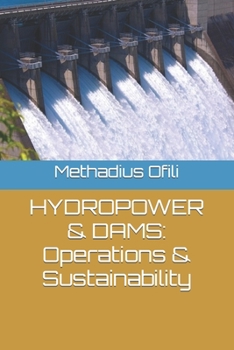
Hydropower & Dams: Operations & Sustainability
No Customer Reviews

Hydropower is the most firmly established, most efficient, mature and largest renewable energy known to humanity. It spans over 100 countries in global usage and provides about 17% of global electricity, while accounting for 100% electricity in some nations. With one of the best conversion efficiencies, it directly captures and converts potential and kinetic energy into electricity, with insignificant heat losses, and needs neither subsidies for profitability nor fuel for operations. While it accounts for more than 70% of global renewable electricity, it is grossly underrepresented in institutional investment portfolios, because of its controversial nature mainly due to negative externalities from its environmental and social impacts. It also has high CAPEX, low OPEX, greater site adaptation requirements, as well as higher complex technical specialist knowledge and active management skill requirements. Of the 3 main categories, reservoir damming remains the most controversial as dam failure is a structural catastrophic breakdown resulting in the sudden, rapid, and uncontrolled discharge of impounded water or the likelihood of an uncontrolled release. More than 200 prominent dam failures occurred globally between 2000 and 2009, killing many. Reservoir safety is especially critical as large reservoirs hold back huge water volumes. Reservoir failures can occur as a result of sabotage, poor construction, or natural disasters as they can be disastrous to downstream settlements and infrastructure. Under international humanitarian law, dams are recognized as "installations containing dangerous forces" due to the huge impact of a possible destruction on the host population and the environment. The Chinese Three Gorges Dam can store 22 cubic kilometres of floodwaters on the Yangtze River. A 1954 flood on this river killed 33,000 people and forced the relocation of 18 million, while a 1998 flood caused 4000 deaths and affected 180 million people. The reservoir flooding led to the relocation of more than one million people. Similarly, the Kainji dams' excess water release chronically floods about 13 states in Nigeria. This is worsened by the additional release of excess water from Cameroon's Lagdo dam through River Benue and its tributaries, flooding already heavily impacted communities, killing many people, destroying properties including homes and farms and forcing relocations. Annual warnings of impending floods without any emergency response and compensation is no longer harming just the living and their environment, but as is the case this year, it is preventing the dead from resting in peace, as many of the buried, were 'flooded' out of their graves, floating in some riverine communities. The principles of Hydropower Sustainability Assessment Protocol helps in the assessment of hydropower project performance across more than 20 sustainability criteria. Its objectives include operational sustainability, high standards in hydropower operations, identification of improvement opportunities, operational transparency and stakeholder engagements and the benchmarking of findings against international standards. Although, water release objectives are many, yet global institutions like the IFC, the World Bank, the International Hydropower Association, the World Commission on Dams, the International Commission on Large Dams and IRENA, along with national governments, NGOs, CBOs and CSOs must ponder if this is what clean energy has to be and ensure that current hydropower ESIA, ESMS, ESG, the Equator Principles, the IFC Performance Standards procedures move the industry towards greater sustainability. This book addresses these issues including site selection parameters like topograhy, geology, hydrology and geography along with design, EPC, E & M, operations, maintenance, environmental and social impacts especially human resettlement and flooding, economics and funding challenges within the context of sustainability.
Format:Paperback
Language:English
ISBN:B0BKCFWCQJ
ISBN13:9798359992817
Release Date:October 2022
Publisher:Independently Published
Length:304 Pages
Weight:0.90 lbs.
Dimensions:0.6" x 6.0" x 9.0"
Related Subjects
TransportationCustomer Reviews
0 rating
Copyright © 2026 Thriftbooks.com
Terms of Use | Privacy Policy | Do Not Sell/Share My Personal Information | Cookie Policy | Cookie Preferences | Accessibility Statement
ThriftBooks ® and the ThriftBooks ® logo are registered trademarks of Thrift Books Global, LLC
ThriftBooks ® and the ThriftBooks ® logo are registered trademarks of Thrift Books Global, LLC
