


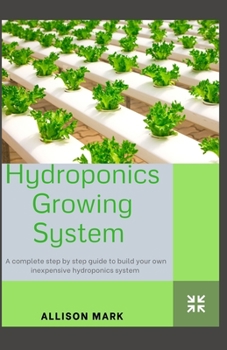
Hydroponics Growing System: A Complete Step-by-Step Beginners Guide to Build Your Own Inexpensive Hydroponics System
No Customer Reviews

The word "hydroponics" comes from the Greek word for water, "hydro," and "ponics," meaning labor. The idea is that there is no soil needed for the plants, and that it is instead the water that does the "labor" of keeping the plants alive and healthy.There are various offshoots of hydroponics. One popular one that may come upon in your research or in conversation is aquaponics. They sound similar, certainly, and both use different names that mean "water," but aquaponics uses fish to help raise the plants.Hydroponics is a technique for developing plants, without soil, that has been used for a huge number of years. From the start, it might appear to be opposing to develop plants with no dirt, however hydroponics is an unpredictable framework that works superior to the conventional strategy for developing plants in soil.In a hydroponic developing framework, a supplement charged, amphibian arrangement is flushed through the root zone to furnish the plants with the assets required for ideal development.There are numerous advantages to utilizing hydroponic develop frameworks: less assets are expended, arable land isn't required, and the harvestable plants are of higher caliber than when developed utilizing conventional strategies. In the last 60 or 70 years, these advantages have expanded the notoriety of hydroponics, and have extended the constrained prospects of indoor and urban planting.This book covers the following topics: What is hydroponics?Benefits of hydroponicsHydroponics vs soil gardeningBuild your own hydroponic systemDifferent types of hydroponic systemPH in Hydroponic system...And much more Ready to get started? Click "Buy Now"
Format:Paperback
Language:English
ISBN:B08N3K5D79
ISBN13:9798561036521
Release Date:November 2020
Publisher:Independently Published
Length:104 Pages
Weight:0.29 lbs.
Dimensions:0.2" x 5.5" x 8.5"
Customer Reviews
0 rating
Copyright © 2026 Thriftbooks.com Terms of Use
| Privacy Policy | Do Not
Sell/Share My Personal Information | Cookie Policy | Cookie Preferences | Accessibility Statement
ThriftBooks® and the ThriftBooks® logo are registered trademarks of Thrift Books Global, LLC
ThriftBooks® and the ThriftBooks® logo are registered trademarks of Thrift Books Global, LLC
