


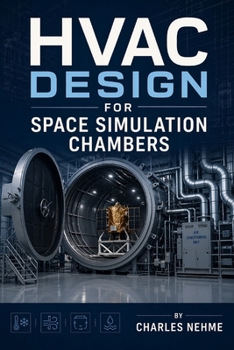
HVAC Design for Space Simulation Chambers

Space simulation chambers represent one of the most demanding environments in engineering. Unlike conventional HVAC applications, these systems are not designed for comfort-they are designed to replicate the extreme and unforgiving conditions of space itself. Temperatures may swing from deep cryogenic levels to extreme heat, pressure may drop toward near-vacuum conditions, and contamination tolerances may be measured at the molecular level.
In such environments, HVAC is no longer a background utility. It becomes a precision engineering discipline that directly determines the success or failure of high-value aerospace testing. A minor thermal instability, an unnoticed moisture intrusion, or a poorly controlled pressure transition can invalidate months of testing or compromise multimillion-dollar spacecraft components.
This book was written to bridge the gap between traditional HVAC engineering and the highly specialized requirements of space simulation facilities. It brings together principles of thermodynamics, heat transfer, vacuum technology, cleanroom engineering, and control systems into a unified design approach tailored for engineers, consultants, and facility operators working in this niche but critical field.
Rather than treating HVAC as a supporting system, this book positions it as a core enabler of simulation accuracy, repeatability, and reliability.
Related Subjects
Engineering Science Science & Math Science & Scientists Science & Technology TechnologyCustomer Reviews
ThriftBooks ® and the ThriftBooks ® logo are registered trademarks of Thrift Books Global, LLC
