


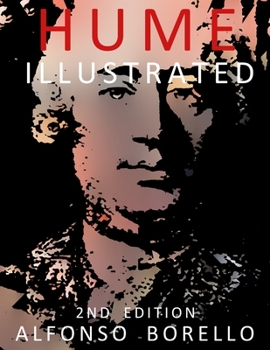
Hume Illustrated: 2nd Edition
No Customer Reviews

Scottish philosopher David Hume―turned historian―was born in 1711 in Edinburgh. He died in August 1776. For many, his concepts and debates on the science of man are still relevant. He made himself even more popular by arguing that what governs human behavior is desire and not reason. He was interested in experimental philosophy in moral matters, and said there is a big difference between "ought" and "is.". By frequency, the most important words (often called objects) used by Hume are reason, nature, cause, imagination, passion, effect, impression, pleasure, existence, and experience. This illustrated book makes use of those terms so that you can cluster the main ideas visually and effortlessly. QUESTIONS ANSWERED- What is Hume's theory?- Does Hume assume that all our ideas must come from impressions?- What is Hume's Copy Principle? - What is Hume idea of existence?- How does Hume define cause? - What did Hume believe?- How does Hume define self?- What did Hume argue?- What does Hume say about cause and effect?
Format:Paperback
Language:English
ISBN:1711050288
ISBN13:9781711050287
Release Date:November 2019
Publisher:Independently Published
Length:44 Pages
Weight:0.28 lbs.
Dimensions:0.1" x 8.5" x 11.0"
Related Subjects
PhilosophyCustomer Reviews
0 rating
Copyright © 2026 Thriftbooks.com Terms of Use
| Privacy Policy | Do Not
Sell/Share My Personal Information | Cookie Policy | Cookie Preferences | Accessibility Statement
ThriftBooks® and the ThriftBooks® logo are registered trademarks of Thrift Books Global, LLC
ThriftBooks® and the ThriftBooks® logo are registered trademarks of Thrift Books Global, LLC
