


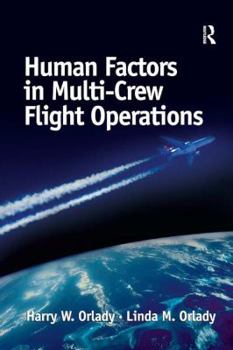
Human Factors in Multi-Crew Flight Operations

Select Format
Select Condition 
Book Overview
This book maps the evolution, growth and expansion of human factors in aviation from World War I and through the 20th Century. Written from the perspective of the well-informed pilot, it provides a vivid, practical context for the appreciation of human factors, and is pitched at a level for those studying or engaged in current air transport operations.
Format:Paperback
Language:English
ISBN:0291398391
ISBN13:9780291398390
Release Date:June 1999
Publisher:Routledge
Length:648 Pages
Weight:2.20 lbs.
Dimensions:1.3" x 6.1" x 9.2"
Customer Reviews
2 ratings
Human Factors for Pilots
Published by Thriftbooks.com User , 18 years ago
This is a unique book on human factors in multi-crew flight operations. I come from a region where a significant number of middle aged pilots leave airlines for greener pastures elsewhere leaving a lot of young first officers flying with relatively elderly captains. Also the culture in many countries tends to be hierarchical and worship seniority (the Captain is God syndrome). This book provides valuable lessons on how to enhance communication, deal with cultural issues, and highlight human limitations and errors, the operating environment, among several other critical subjects. The subject is treated very well in a reader-friendly manner. The importance of CRM is highlighted and the need to work as a team. Since most airplane accidents worldwide are as a result of human factors, the importance of this subject to pilots cannot be underestimated. Hence this is a useful and handy book to read and refer to often and keep on your bookshelf as a ready reference manual.
A Book All Commercial Pilots Must Read & Own..
Published by Thriftbooks.com User , 24 years ago
A father and daughter team! It is rare enough to have a flying father and a flying daughter in the real world, but sharing the same passion so intensely and to write a book together on an all-encompassing aviation Bible, (yes, this book is a Bible for aviators!) is truly unprecedented!When I said this book covers virtually all topics concerning flight operations, I meant just that. The most important thing is; this book is highly readable, rich in reference materials and data and yet "gripping" to read! A rare gem in terms of human factor topics. I have read other CRM or human factors books by other more renowned and authoritative people but none as good as the Orladys, probably with the exception of Tony Kern, who is also just as good a writer on aviation safety.Okay, the book covers the brief history of air transport, the industry and its safety record,, a brief history of human factor and its development in aviation,, the physical environment and the physiology of flight, as well as those magnificent flying machines and their internal environment - sort of like a trip down to aviation memory lane.It also discussed the social environment, basic communication, documentation - including checklists and information management. It went on to discuss on the Man's limitations, human errors, and information processing. Nothing is left unturned, the Orladys went on to talk about workload, automation, situation awareness and operating in today's environment. Of course, they did not miss out on crew resource management and the team approach.Fatigue and stress were covered in depth, plus fitness to fly, even selection and training of pilots! Most interestingly is the coverage on the challenging roles of the flight attendants, this shift in focus of our cabin colleagues was most insightful.I loved the chapter on non-punitive incident reporting.. the CHIRP and ASRS were great success stories in UK and USA respectively, I fervently hope that SIA will follow suit in our pursuit of excellence in aviation flight safety.Another eye-opener chapter is "some ramifications of accident analysis", this is the first time I heard of the "Stop Rule" phenomenon in flight safety investigation - find it out yourself what it means.In the last few chapters, the Orladys talked about the worldwide safety challenge in the near future, the current safety problems and the future of air transport too.This is not a book to be missed by any pilot who wish to enrich himself. In fact, I recommend that every single commercial pilot should own a copy for reference purposes as well.
Copyright © 2026 Thriftbooks.com Terms of Use
| Privacy Policy | Do Not
Sell/Share My Personal Information | Cookie Policy | Cookie Preferences | Accessibility Statement
ThriftBooks® and the ThriftBooks® logo are registered trademarks of Thrift Books Global, LLC
ThriftBooks® and the ThriftBooks® logo are registered trademarks of Thrift Books Global, LLC
