





Book Overview
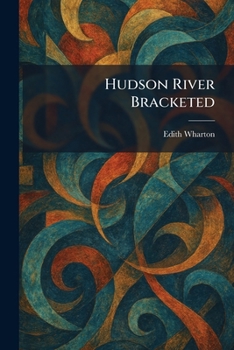
"Hudson River Bracketed" is a profound exploration of the American artistic soul and the cultural divide between the traditional East Coast and the burgeoning Middle West. Written by Pulitzer Prize-winner Edith Wharton, this novel follows the journey of Vance Weston, a young man with literary aspirations who travels from his home in the Midwest to the storied landscapes of the Hudson River Valley. Upon discovering "The Willows," an estate built in the distinct architectural style that gives the book its name, Vance is drawn into a world of intellectual depth and historical resonance that contrasts sharply with his own background.
Through Vance's eyes, Wharton examines the complexities of creative growth and the social structures of 1920s America. His relationship with the sophisticated Halo Spear serves as a catalyst for his development, highlighting the tensions between inherited culture and raw, modern talent. This work stands as a significant contribution to the American literary canon, offering a nuanced look at the sacrifices required for artistic success and the enduring influence of the past on the present. With its rich prose and keen social observation, "Hudson River Bracketed" remains a compelling study of ambition, love, and the search for identity in a rapidly changing world.
This work has been selected by scholars as being culturally important, and is part of the knowledge base of civilization as we know it. This work was reproduced from the original artifact, and remains as true to the original work as possible. Therefore, you may see the original copyright references, library stamps (as most of these works have been housed in our most important libraries around the world), and other notations in the work.
This work is in the public domain in the United States of America, and possibly other nations. Within the United States, you may freely copy and distribute this work, as no entity (individual or corporate) has a copyright on the body of the work.
As a reproduction of a historical artifact, this work may contain missing or blurred pages, poor pictures, errant marks, etc. Scholars believe, and we concur, that this work is important enough to be preserved, reproduced, and made generally available to the public. We appreciate your support of the preservation process, and thank you for being an important part of keeping this knowledge alive and relevant.
Customer Reviews
Novel explores turbulent side of literary genius
ThriftBooks ® and the ThriftBooks ® logo are registered trademarks of Thrift Books Global, LLC
