


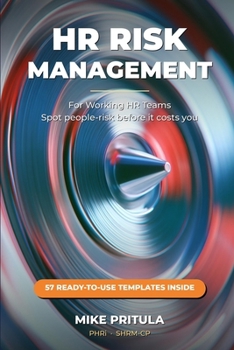
HR Risk Management for Working HR Teams: Spot People-Risk Before It Costs You

I've sat in operating reviews, hiring debates, and board updates for twenty years - at a bank, abroadcaster, a games company, and two fast-scaling tech firms. Same script every time.
A decision lands on the table. It carries real risk, but it is framed as routine, so nobody treats it as a risk. Twopeople in the room have a doubt. Neither says it out loud, because disagreeing with the group costs more thanbeing quietly wrong with it. The decision passes. Six months later everyone agrees it was obvious, and no oneremembers staying silent. The loss gets filed under bad luck.
It was never bad luck. It was Human Risk - the plain fact that people inside and outside a company make poordecisions, and that those decisions do far more damage than the fire or flood the company actually insuresagainst. It is the most expensive risk most companies own, and the one almost nobody on the HR team isasked to manage.
What works:
Human Risk - name it as a tracked category and it stops hiding inside ordinary workISO 31000 for people - the bank's risk standard, pointed at decisions instead of propertyPersonal Connection Maps - surface the relationships that quietly bend a callReal escalation routes - that work without depending on one brave personWhat doesn't:
Assuming smart people don't make dumb callsMeasuring engagement to two decimals while the decisions go unwatchedTreating culture as a poster instead of a risk multiplierThe system in this book is what I've seen work, built for the HRBP with no risk department and no sparebudget. 57 templates inside - registers, scorecards, charters, checklists - every one printed on the page. Nodownloads, no email walls, no dead links.
Academic HR-risk and compliance manuals run $50 to $100 and read like reference texts; an HR-riskconsultant costs far more for a single day. This is the working version, for the price of a paperback.
Read it once. Then watch your next operating review go differently.
Customer Reviews
ThriftBooks ® and the ThriftBooks ® logo are registered trademarks of Thrift Books Global, LLC
