


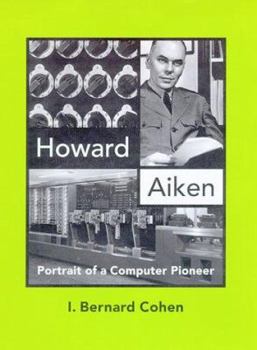
Howard Aiken: Portrait of a Computer Pioneer (History of Computing)
(Part of the History of Computing Series)


Select Format
Select Condition 
Book Overview
Howard Hathaway Aiken (1900-1973) was a major figure of the early digital era. He is best known for his first machine, the IBM Automatic Sequence Controlled Calculator or Harvard Mark I, conceived in 1937 and put into operation in 1944. He also made contributions to the development of applications for the new machines and to the creation of a university curriculum for computer science.
Format:Hardcover
Language:English
ISBN:0262032627
ISBN13:9780262032629
Release Date:June 1999
Publisher:MIT Press
Length:412 Pages
Weight:2.55 lbs.
Dimensions:9.5" x 1.3" x 6.8"
Grade Range:Postsecondary and higher
Customer Reviews
1 rating
a partisan look at Aiken
Published by Thriftbooks.com User , 20 years ago
The book is a partisan contribution to a long running skirmish about the dawn of modern computing. To what extent did Aiken influence the design of IBM's first postwar computers? Today, this issue is of interest only to the historians of computing. But Cohen takes us back to those early times. When the basic architecture was being laid down, and not all the implications were fully understood. It is best to keep that in mind when reading the book. Neither Aiken or IBM's engineers fully understood what they were doing. But we can only say that with the benefit of 60 years hindsight, and a hugely successful computer industry. Certainly, Aiken comes off as visionary. But perhaps Cohen understates IBM's contribution?
Copyright © 2026 Thriftbooks.com
Terms of Use | Privacy Policy | Do Not Sell/Share My Personal Information | Cookie Policy | Cookie Preferences | Accessibility Statement
ThriftBooks ® and the ThriftBooks ® logo are registered trademarks of Thrift Books Global, LLC
ThriftBooks ® and the ThriftBooks ® logo are registered trademarks of Thrift Books Global, LLC
